
Hollow Under-Eye Circles: when you look in the mirror in the morning, these are often the first details you notice: those hollowed grooves under your eyes that make you look tired, sometimes even ill, when you feel perfectly well.
Hollow under-eye circles affect nearly 30% of adults over 35, and their appearance can literally transform your face, making you appear older than you actually are. As an chirurgien oculoplasticien specializing in the eye area for over fifteen years, I see patients daily who come with the same concern: how can I restore a rested look without it looking « done » or artificial?
Hollow under-eye circles correspond to a loss of volume in the tear trough, this delicate zone located under the eye where the skin is particularly thin. Unlike colored dark circles which result from pigmentation or visible blood vessels, hollow under-eye circles are a deficit of adipose tissue.
Under-eye fat grafting, which we regularly perform in our practice, involves harvesting your own fat from a discreet area (usually the abdomen or thighs) and precisely reinjecting it into the hollows under the eyes. This autologous fat injection technique offers a natural and durable result, as the grafted fat becomes an integral part of the tissues.
We understand that the idea of undergoing a procedure in such a visible area as the eyes can generate apprehensions. That is why each treatment is preceded by an in-depth consultation during which we analyze your facial morphology, your skin quality, and your real expectations.
Under-eye fat grafting requires a customized approach: too much product will give a « puffy » look, while too little will not sufficiently correct the defect. Our experience in eyelid & oculoplastic surgery allows us to precisely dose the amount of fat to inject to restore the natural volumes of your gaze.
Understanding Hollow Under-Eye Circles: Causes and Lasting Solutions
Why Do Under-Eye Circles Appear?
Hollow under-eye circles correspond to a loss of volume under the eyes, creating a tired and aging appearance. Several factors explain this hollowness: natural aging leads to a decrease in subcutaneous fat, and over time, the orbital bones lose density.
The skin in this area is particularly thin, about 0.5 millimeters in thickness, making deep modifications quickly visible. Tissue relaxation and fat loss create this sunken appearance that intensifies with age. Some patients have a hereditary predisposition, with hollow under-eye circles appearing as early as 20 or 30 years old. Lack of sleep, stress, and dehydration temporarily worsen the appearance of dark circles, but they do not create definitive hollowing on their own.
Tear Trough and Orbital Hollowing
We speak of the tear trough to designate the groove that separates the cheek from the eyebrow, just below the eye. It is precisely in this area that the orbital hollowing characteristic of hollow under-eye circles manifests.
With age, the orbicular muscle thins and periorbital fat migrates downward, leaving a void. This phenomenon is often accompanied by a shadow that accentuates the tired appearance. The combination of these elements creates what patients describe as « sunken eyes » or a hollowed gaze. Under-eye fat grafting allows restoring the lost volume using your own fat, offering a natural and durable result.
Hollow Dark Circles vs. Colored Dark Circles
It is essential to distinguish hollow dark circles from colored dark circles, as treatments differ radically. Colored dark circles result from hyperpigmentation or visible vascularization, treated by laser or intense pulsed light.
Hollow dark circles, on the other hand, come from a volume deficit. Filling dark circles by fat injection restores the relief and eliminates the shadow responsible for the dark appearance. A consultation allows precisely determining the nature of your dark circles and directing toward the solution most adapted to your situation.
Under-eye fat grafting: what exactly is it?
Principle of autologous fat grafting
Under-eye fat grafting, also called fat grafting of the under-eye hollows, is a oculoplastic surgery technique that involves harvesting your own fat and reinjecting it into the hollow under-eye area.
This approach offers a major advantage: it uses autologous material, meaning material from your own body, which eliminates any risk of rejection or allergy. The injected fat does not simply fill the missing volume under the eyes, it also delivers growth factors that can improve the quality of the surrounding skin. The result is naturally long-lasting, unlike resorbable fillers that require regular touch-ups.
Harvesting and purification zones
The fat needed to fill hollow under-eye areas is typically harvested from the abdomen or love handles, areas where the fat is sufficiently dense and of good quality.
Once aspirated, this fat undergoes a purification process through centrifugation or filtration to retain only intact adipose cells. This step is crucial as it largely determines the survival of the grafted fat cells and therefore the longevity of the result. The volume harvested remains minimal, typically between 5 and 10 milliliters, making the procedure minimally invasive at the harvest site.
Difference from filler injections
Unlike hyaluronic acid injections that temporarily fill hollow under-eye areas, fat grafting offers a lasting solution once the fat has survived the first few months. Hyaluronic acid injections last on average 6 to 12 months and require regular maintenance sessions.
Fat grafting, although more invasive initially, can undeniably reduce long-term costs. Additionally, the injected fat integrates perfectly with existing tissues and does not create the sometimes overly rigid appearance obtained with certain synthetic fillers. This technique is particularly suitable for patients with significant hollow under-eye areas, where a larger volume needs to be restored naturally and permanently.
Lipofilling vs Hyaluronic Acid: The Definitive Comparison
Are you hesitating between lipofilling and hyaluronic acid injections to treat your hollow under-eye circles? This practical comparison helps you see more clearly, with complete peace of mind.
Durability of Results
The major difference lies in the duration of effects. Hyaluronic acid, used for filling hollow under-eye circles, is a temporary substance that naturally resorbs over time. Generally, you will need to renew the injection every 12 to 18 months to maintain the result.
Lipofilling for hollow under-eye circles offers a different approach: the harvested fat is reinjected, and when it survives the graft, it remains permanently. We generally observe a stable result after 3 months, the time it takes for the fat cells to integrate. Approximately 50 to 70% of the injected fat survives long-term, which means the effects can last between 5 and 10 years, or even more. This is a considerable advantage if you are looking for a durable solution rather than regular touch-ups.
Risks and Complications
Both techniques are safe when performed by a qualified chirurgien oculoplasticien. Hyaluronic acid injection rarely leads to major complications. You may experience slight swelling or small bruises that disappear in 2 to 5 days.
Lipofilling for hollow under-eye areas requires a slightly more extensive procedure since fat is harvested, usually from the abdomen or thighs. Post-operative recovery is slightly longer: swelling and bruising for approximately one week. The specific risk of lipofilling is poor graft survival, which may require a touch-up. In both cases, the risks of infection or nodules are very low when the procedure is performed under appropriate conditions.
Cost and Maintenance
The financial aspect varies depending on the case. Hyaluronic acid injection for hollow under-eye circles represents a lower initial investment, but it repeats every year or two. Over 10 years, the costs add up.
Lipofilling requires a higher initial investment, but touch-ups are rare. In practice, your chirurgien oculoplasticien will provide a personalized quote during the consultation, as each patient presenting hollow under-eye circles has unique anatomy. Feel free to ask all your questions about the overall cost and potential touch-up scenarios during your appointment.
The advantages of fat grafting for hollow under-eye circles
Fat grafting for hollow under-eye circles represents a particularly suitable solution for treating the hollowing under the eyes.
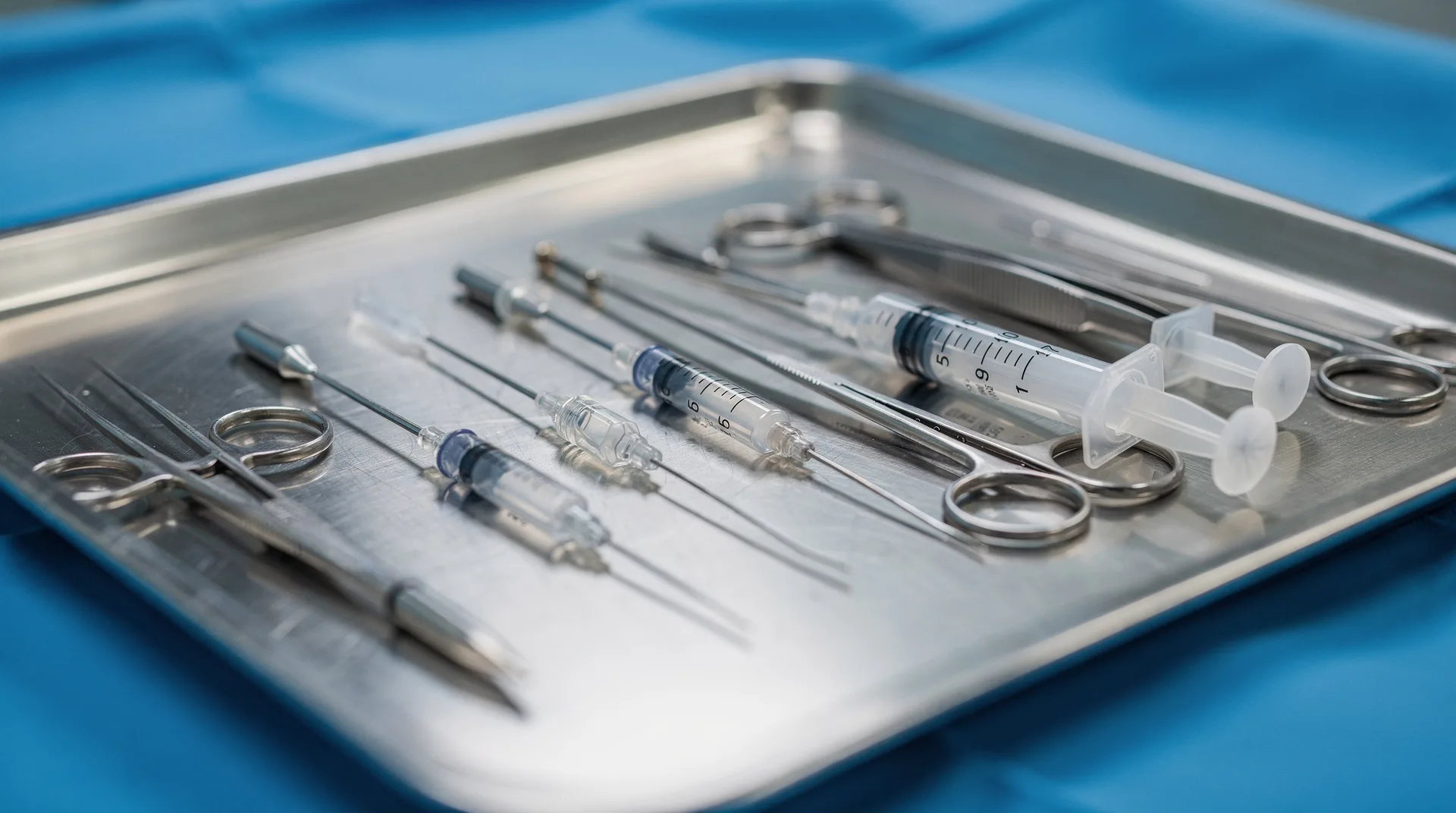
Unlike resorbable filler injections, this technique uses your own fatty tissue, usually harvested from the abdomen or thighs, then precisely reinjected into the hollow of the under-eye circles. This approach offers several distinctive advantages that explain its growing popularity among patients treated for hollow under-eye circles.
Natural and permanent result
The result of fat grafting for hollow under-eye circles is distinguished by its particularly natural appearance. The transferred fat integrates harmoniously with the surrounding tissues, avoiding the sometimes overly visible or « puffy » look that some patients fear.
Unlike hyaluronic acid injections that require touch-ups every 12 to 18 months, fat grafting offers a durable solution. Once the fat has survived (approximately 50 to 70% of the injected quantity settles permanently), the result can last several years, or even definitively for some patients. This longevity represents a significant long-term economic advantage.
No risk of migration
One of the major advantages of fat grafting compared to other filler techniques lies in the absence of product migration.
Since fat injections are performed in a deep plane and collected in a manner, the product stays exactly where the chirurgien oculoplasticien placed it. This avoids concerns about the product moving toward the cheeks or lower eyelids, a risk described with certain filler materials.
Certified surgical approach
Fat grafting for under-eye circles is performed by a qualified chirurgien oculoplasticien in an appropriate facility, ensuring sterility and safety. The procedure typically lasts between 45 minutes and 1 hour and can be performed under local anesthesia with light sedation.
The recovery period is relatively short: bruising and swelling disappear within 7 to 10 days on average. This certified surgical approach provides you with a supervised medical setting, with personalized follow-up tailored to your individual situation.
Procedure for fat grafting
Pre-operative consultation
Before any procedure on hollow under-eye circles, a thorough consultation is essential. Your chirurgien oculoplasticien evaluates the extent of the hollowness, the quality of your skin, and your facial morphology.
He also examines possible donor sites for fat harvesting, usually the abdomen or inner thighs. A simple blood test is often required. This consultation also allows us to verify there are no contraindications and explain the precise procedure for under-eye fat grafting. This is the time to ask all your questions about postoperative recovery and the expected result.
The procedure in the operating room
The procedure for filling hollow under-eye circles with fa
0 Comments