
Tired Eye: When you look at yourself in the mirror in the morning, it is often your eyes that first reveal accumulated fatigue, stress, or simply the passing years.
The tired eye is one of the most common consultations in our Paris practice: according to epidemiological studies in oculoplastic surgery, more than 60% of patients who seek treatment for their eyes express this same feeling, that of appearing older or less dynamic than they feel inside. This dissonance between appearance and inner feeling can influence self-confidence and daily interactions, which is why we place particular importance on every preliminary consultation.
A tired eye can have several causes that are essential to identify precisely: under-eye bags related to the repositioning of periorbital fats, hollow dark circles that create a permanent shadow beneath the eyes, eyebrow drooping corrected by brow lift, or excess skin of the upper eyelids treated by blepharoplasty.
Each patient presents a unique anatomy, and it is precisely this singularity that determines the most suitable treatment plan. Eye surgery is never a standardized procedure: it requires a thorough analysis of facial morphology, skin quality, and the real expectations of each individual.
As a former Chief Clinical Officer in ophthalmology and an chirurgien oculoplasticien specialist in eye aesthetics for over twenty years, I have developed an approach that prioritizes natural results and global facial harmonization.
My goal is never to radically transform your appearance, but to help you regain an open, rested, and expressive look that corresponds to your inner energy. Every procedure is performed with microscopic precision, with absolute respect for your eye anatomy: protecting your vision is ALWAYS our absolute priority.
In the following pages, we will explore together the different surgical and medical solutions to treat tired eyes, explain the consultation and procedure process, give you a realistic idea of recovery times, and answer the questions our patients ask most frequently.
You will also find practical information to prepare for your first visit and understand what to expect. This guide was designed to accompany you with clarity and transparency, as if you were already in our practice.
Why do my eyes look tired?
Signs of eye aging
Several visual elements contribute to this tired appearance that you notice each morning in front of your mirror. Under-eye bags constitute one of the most visible signs, related to the progressive displacement of periorbital fats. Hollow dark circles, on the other hand, create a bluish or purplish shadow that gives the impression of insufficient sleep even after a full night’s rest.
The skin of the eyelids, particularly thin and delicate, progressively loses its elasticity starting around age 30. Fine lines that appear at the corner of the eyes, often called crow’s feet, accentuate this impression of a tired gaze. The eyebrow can also descend slightly, weighing down the eyes and diminishing their natural radiance. These changes affect both women and men, sometimes asymmetrically, which reinforces the feeling of permanent fatigue.
Anatomical causes and external factors
Beyond natural aging, several anatomical factors contribute to this tired appearance. The bony structure of the orbit, heredity, and skin quality vary from person to person and explain why some patients develop these signs earlier than others. The loosening of the orbicular muscle, which surrounds the eye, also contributes to the formation of bags and loss of firmness.
At the same time, certain external elements accelerate this process: sun exposure without protection, tobacco, chronic stress, and lack of sleep act as aggravating factors. Skin dehydration and seasonal allergies can also temporarily accentuate the appearance of dark circles. It is important to understand that these signs do not always reflect your true state of fatigue or your actual age. A consultation with a specialized chirurgien oculoplasticien will allow precise identification of the causes of your tired eye and discussion of solutions adapted to your personal situation.
Non-surgical solutions to rejuvenate the gaze
If you suffer from a tired appearance but the idea of surgery concerns you, several non-invasive solutions can help reduce the signs of tired eyes without the constraints of blepharoplasty.
These treatments are particularly suitable for patients showing early signs of aging or wishing to test the results before considering definitive eyelid & oculoplastic surgery.
Hyaluronic acid injections
Hyaluronic acid is a leading option for treating hollow under-eye circles and volume loss beneath the eyes. By filling the tear trough hollow, this injection provides support to the skin and reduces the sunken appearance that accentuates a tired gaze.
The product used is specifically designed for the delicate eye contour area, with a lightweight texture that avoids puffiness. Results are immediate and generally last between 12 and 18 months depending on the product chosen and your metabolism. The session lasts approximately 15 to 20 minutes and requires no significant social downtime.
Botulinum toxin baby botox
Baby botox represents a gentle approach to botulinum toxin, ideal for slightly relaxing the muscles around the eyes without paralyzing the expression of the gaze. This technique primarily targets crow’s feet and glabellar lines that contribute to giving an exhausted appearance.
The dosage used is well below that of a standard treatment, hence the name baby botox. The effect appears gradually over 5 to 7 days and lasts 4 to 6 months. This approach is particularly suitable for younger patients who wish to prevent the onset of wrinkles rather than correct them. The gaze regains its natural radiance without any radical change to your expression.
Laser and complementary treatments
Laser treatments stimulate collagen production and improve the quality of the skin around the eyes.
Fractional laser works on fine lines and the grainy appearance of under-eye bags, while certain lasers specifically designed for this area can also fade the pigmentations responsible for dark circles. Additionally, topical treatments based on vitamin C and peptides daily reinforce the results of procedures performed in the clinic. The combination of these approaches achieves progressive and natural rejuvenation of the tired gaze, without the post-operative recovery of surgical intervention.
Blepharoplasty: the reference surgery for the gaze
When the gaze appears sad, tired, or aging despite adequate sleep, blepharoplasty represents a particularly effective and lasting surgical solution.
This eyelid & oculoplastic surgery procedure specifically targets excess skin and fatty hernias that weigh down the gaze, restoring a rested and dynamic appearance.
Eyelid surgery adapts to each type of tired gaze imperfection.
During the consultation, we evaluate skin quality, the degree of upper eyelid ptosis, and the severity of under-eye bags to propose a personalized technique. Our goal remains always to preserve the natural expression of the gaze while erasing signs of fatigue.
Upper Blepharoplasty
Upper blepharoplasty corrects drooping eyelids that give a sleepy appearance and may sometimes reduce the visual field. We remove excess skin and, if necessary, a portion of the fatty hernias located in the upper eyelid.
The incision, positioned in the eyelid crease, becomes nearly invisible once healed. This procedure takes approximately one hour under local anesthesia with sedation. Bruising and mild swelling generally disappear in seven to ten days, allowing a quick return to social activities.
Lower Blepharoplasty
Lower blepharoplasty targets under-eye bags that give a hollow, tired appearance. This technique removes or redistributes the fatty deposits responsible for the hernias.
Depending on the patient’s anatomy, the incision can be placed just below the eyelashes or inside the eyelid, leaving no visible scar. Post-operative recovery is similar to that of upper blepharoplasty, with bruising gradually disappearing in about a week. The final result is fully appreciated after two to three months, once the tissues have regained their elasticity.
Pinch Blepharoplasty
Pinch blepharoplasty is an approach suited for patients with hollow under-eye circles without significant skin excess. This technique literally pinches the excess skin over a few millimeters, without affecting deep muscle or fatty structures.
It provides a very natural result by smoothing the transition between the eyelid and the cheek. Less invasive than classical techniques, it requires a shorter operative time and lighter recovery. However, it is not suitable for all patients and does not correct pronounced bags.
Blepharoplasty thus definitively treats signs of the tired gaze by precisely adapting to each imperfection. Results generally last for a decade or more, making this procedure a lasting investment to restore a bright, rested gaze.
Eye Area Lipofilling: The Natural Technique
Eye area lipofilling represents an innovative approach to treating a tired eye appearance permanently.
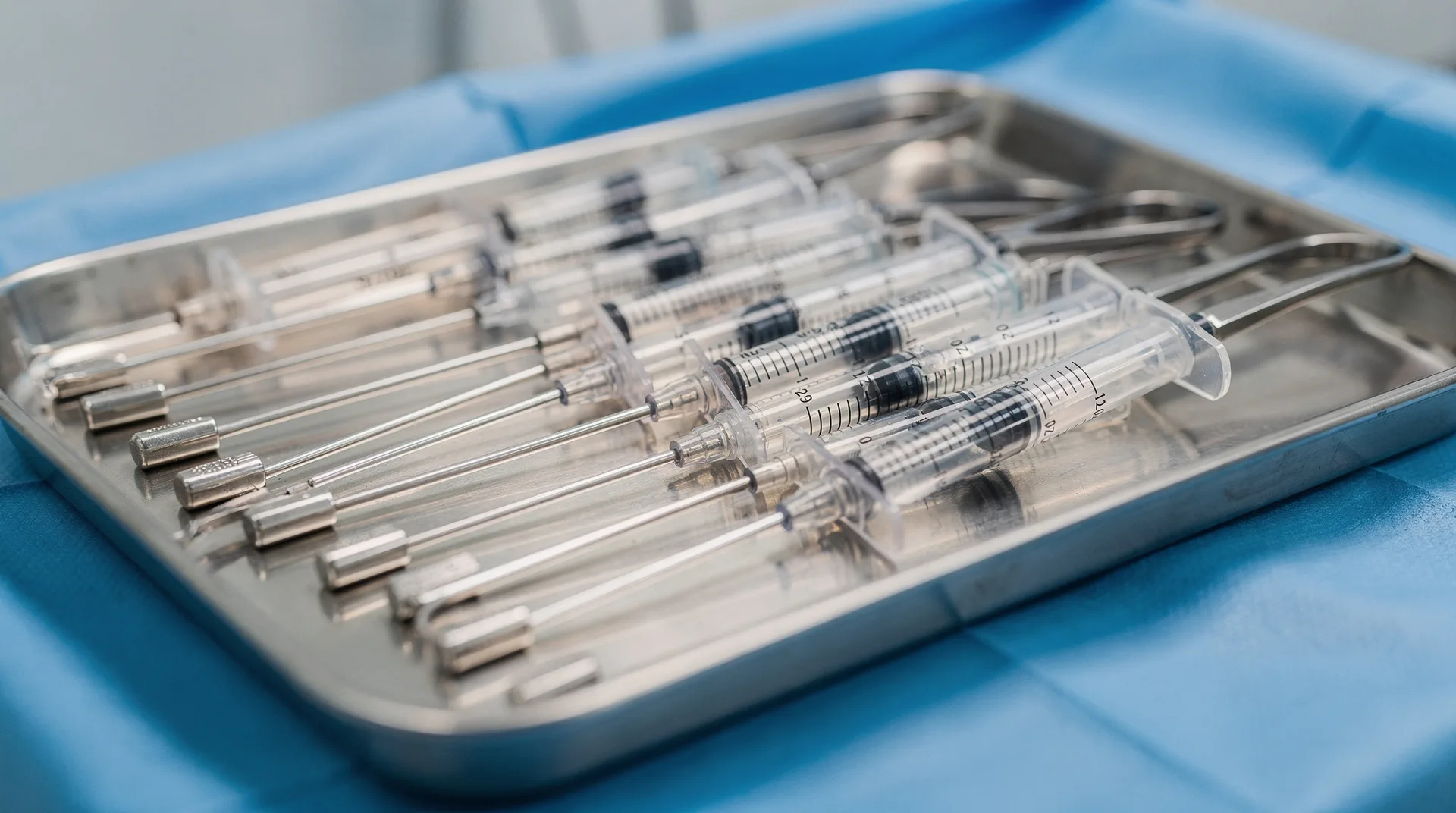
This eyelid & oculoplastic surgery technique uses your own adipose tissue to restore lost volume around the eyes, offering a natural and long-lasting result. Unlike temporary injections, lipofilling allows us to permanently correct hollow under-eye circles and temple hollowness in a single procedure.
Lipofilling for Hollow Under-Eye Circles
Hollow under-eye circles are one of the primary causes of a tired eye appearance. Over time, the tissue volume beneath the eyes diminishes, creating shadows that give a fatigued look even after a full night’s rest.
Lipofilling involves harvesting fat from a donor area (typically the abdomen or thighs), purifying it, and then precisely injecting it into the hollows beneath the eyes. This purified fat integrates permanently, and the results last for several years. Correction of hollow under-eye circles via lipofilling typically requires between 2 and 4 milliliters of fat per side, depending on the extent of volume loss.
Temple Lipofilling
Hollow temples also significantly contribute to a tired eye appearance. With aging, temple fat diminishes, emphasizing visible bone structure and giving the face a gaunt appearance.
Temple lipofilling allows us to restore this lost volume naturally. The procedure takes approximately 45 minutes per side and is performed under local anesthesia or light sedation. Post-operative recovery is generally straightforward, with mild swelling that subsides within a few days.
Advantages Compared to Fillers
Lipofilling offers several advantages over temporary dermal fillers. First, the result becomes permanent after the fat graft takes, unlike hyaluronic acid injections which require regular touch-ups every 12 to 18 months.
Second, lipofilling uses your own tissue, eliminating any risk of allergic reactions. Third, the result looks and feels completely natural. Finally, lipofilling allows us to treat multiple areas of the eye region simultaneously during a single procedure, whether hollow under-eye circles, temples, or cheek volume.
0 Comments