
Here is the corrected content with the specified changes:
« `html
As a surgeon specializing in the periocular region for over twenty years, I see in my Paris clinic each week patients who have arrived with sequelae from injections performed by fake injectors, these unqualified practitioners who offer low-cost treatments without adequate medical training.
The statistics are concerning: according to data from the French Society of Aesthetic Medicine, more than 15% of aesthetic injections performed in France would be carried out by individuals without a medical degree. This reality worries me deeply, as the consequences can be disastrous for your health and appearance.
When you seek treatment for a failed aesthetic injection to the eyes or face, you have often gone through a traumatic experience: persistent lumps, or even more serious complications such as vascular occlusions.
I understand the anxiety you feel when walking through my clinic door. My role is first to listen to you, to precisely assess the damage, then to explain the correction options with clarity and honesty. Each face is unique, and the solutions I propose are always personalized.
We regularly see cases of aesthetic injection scams or illegal aesthetic injections that could have been avoided. Before any injection, it is essential that you verify your practitioner is a qualified doctor, that they practice in a regulated setting, and that they can show you photos of their own patients before and after.
The lowest price should never be your selection criterion. If you have already been the victim of an unqualified injector, know that solutions exist to correct the damage and restore a harmonious gaze. I will accompany you with the same rigor and attention to detail that I bring to all my oculoplastic surgery procedures.
What is a fake injector in aesthetic medicine?
What is a fake injector in aesthetic medicine?
Definition of fake injector
A fake injector refers to any person who performs aesthetic injections without the required medical qualification. This term, borrowed from English and now used in France, encompasses aesthetics practitioners without medical degrees, health professionals outside the aesthetic field, or individuals practicing in unsuitable hygienic conditions.
These unqualified injectors often offer treatments at lower cost, but the risks involved are considerable. Failed eye injections, for example, can lead to permanent visual disturbances, definitive asymmetries, or skin necrosis. The term fake injector also encompasses pseudo-professionals who falsify their credentials or usurp medical legitimacy.
French legal context
In France, the regulation is clear: only doctors can legally perform filler injections (hyaluronic acid) or botulinum toxin injections. This requirement is set out in the French Public Health Code and is subject to strict oversight by professional governing bodies.
Illegal aesthetic injection is an offense punishable by law, with penalties of up to two years imprisonment and a 30,000 euro fine. Despite this, many fake injectors continue to practice, often through social media or at home, thus evading controls. If you are considering an injection, it is essential that you verify your practitioner is registered with the French Medical Council and specializes in aesthetic medicine.
Why fake injectors proliferate
Several factors explain this proliferation. The first remains economic: fake injectors often offer rates 30 to 50% lower than those charged by qualified doctors, thus attracting price-sensitive patients. The second factor concerns the democratization of social media, where these false professionals display manipulated or unrepresentative result photos.
The third element lies in the lack of public awareness about the real risks. Aesthetic injection scams are common, and many patients seek treatment afterward in aesthetic medicine services to correct the damage caused by an unqualified injector. Vigilance remains your best protection: always require a prior consultation, a detailed quote, and verify the practitioner’s actual qualifications before any procedure.
How to recognize a fake injector before aesthetic injection
You are considering aesthetic injections and want to ensure you choose a qualified professional? This concern is legitimate.
More and more people who have been victims of fake injectors are experiencing significant physical and psychological consequences. Failed eye injections, facial deformities, or infections represent real risks when the practitioner lacks training or experience. Here is how to protect yourself before committing.
5 major warning signs
Several signs should immediately alert you. First, the price offered is significantly lower than standard market rates. If a hyaluronic acid injection is offered at 50 euros when the average price ranges between 300 and 600 euros depending on the treatment area, this likely indicates an inferior quality product or an unqualified injector. Second, the practitioner refuses to show you the product before the injection or cannot explain its origin.
Third, the preliminary consultation is nonexistent or very brief. A qualified professional always takes the time to assess your face, discuss your expectations, and explain the risks. Fourth, the treatment location is not a medical office or accredited clinic. Injections performed in beauty salons, private apartments, or at temporary events often constitute illegal aesthetic procedures. Fifth, the practitioner does not provide you with a lot number for the injected product or traceability documentation.
Questions to ask during consultation
Do not hesitate to ask these questions during your first appointment. Ask about their specific training in aesthetic medicine and the number of injections they perform each year. An experienced professional will have performed several hundred injections. Inquire about the products used and ask to see the labels.
Verify that they have emergency equipment in case of an allergic reaction. Do not hesitate to ask to see before-and-after photos of patients who received the same treatment. A fake injector will often struggle to provide concrete evidence of their expertise. Finally, ask what happens in case of complications and what follow-up is planned after the injection.
Practitioner verification (RPPS, Medical Board)
Verifying the practitioner is your best protection. In France, only doctors, oculoplastic surgeons, and nurses under medical supervision are legally authorized to perform aesthetic injections. You can verify registration with the Medical Board on the public website. The RPPS number (Shared Directory of Health Professionals) confirms the identity and qualifications of the practitioner.
Also verify that the doctor has professional liability insurance specific to aesthetic procedures. This insurance is mandatory and protects you in case of an incident. Do not hesitate to ask for this proof during the consultation. A transparent professional will have no difficulty providing it. If you notice irregularities or if the practitioner seems to be avoiding your questions, take time to reflect before committing. Your safety comes first.
Risks of Failed Injections Around the Eyes
Aesthetic injections around the eyes, whether hyaluronic acid fillers or botulinum toxin, require precise knowledge of facial anatomy.
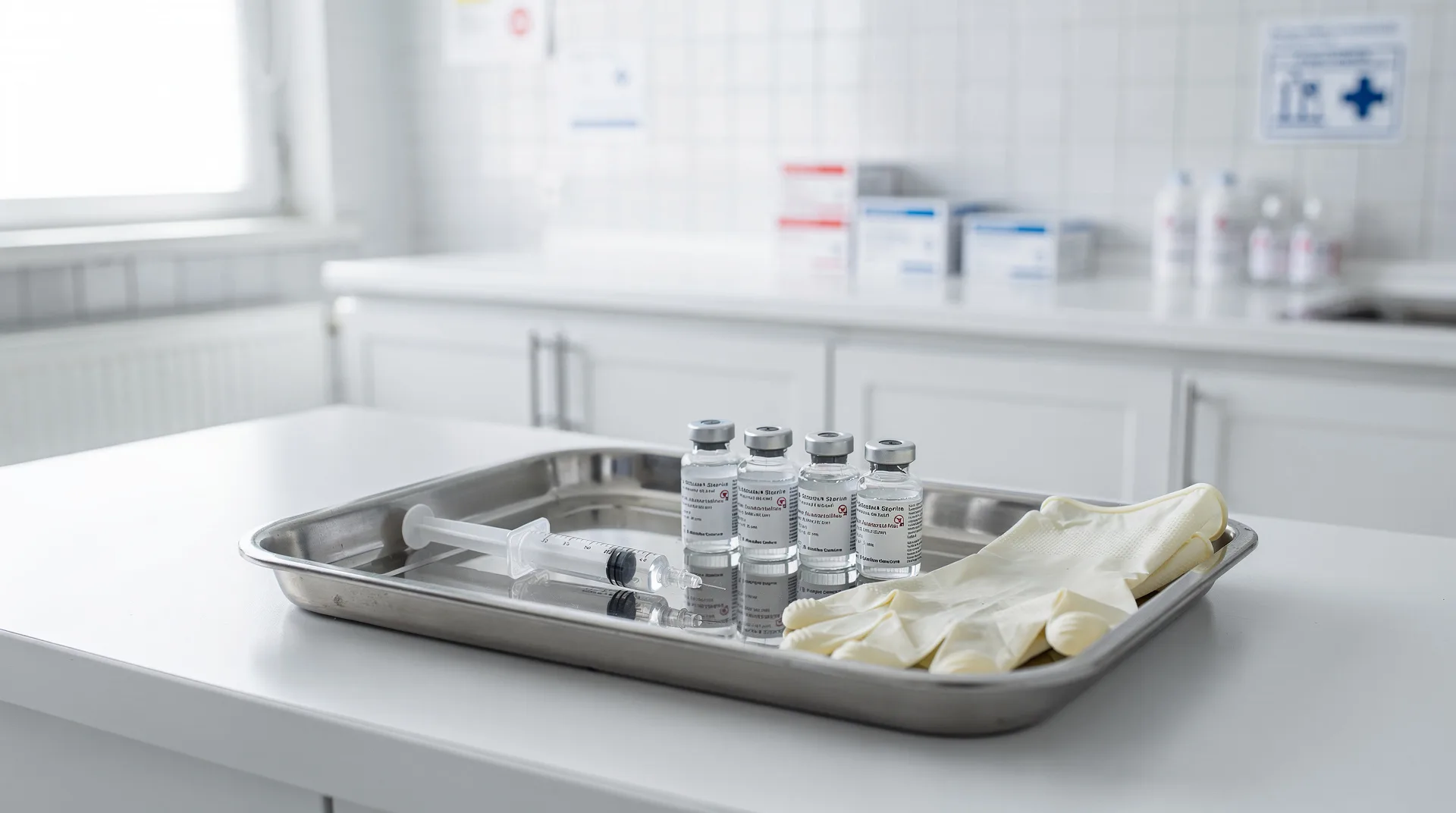
When these injections are performed by a fake injector, meaning an unqualified person operating illegally, the risks increase considerably. This practice, increasingly common especially on social media, poses a real danger to your visual and skin health.
Immediate Complications
In the hours following a failed injection, several complications may appear. Bruising and hematomas are frequent when an unqualified injector hits a blood vessel. Excessive swelling, sometimes asymmetrical, may occur and persist for several days.
Some patients report significant pain in the temples or eyelids, which is a sign of an injection error. Persistent redness and itching may also indicate an abnormal inflammatory reaction. In some cases, temporary loss of sensation in the treated area is observed, indicating nerve damage. These immediate complications, although potentially reversible, are often a sign of an unsuitable technique and should prompt you to consult a doctor promptly.
Risks of Blindness and Necrosis
The most serious complications involve vascular occlusion. When filler product is injected into an artery supplying the eye, the obstruction can lead to partial or total vision loss, sometimes within just minutes. This risk, although rare, is real and has been documented in international medical literature.
Skin necrosis is another dreaded complication: the lack of blood supply causes tissue death, leaving deep wounds that are difficult to treat. These medical emergencies require immediate intervention with hyaluronidase injections to dissolve the product. The intervention delay is crucial: the longer it is, the more likely the sequelae will be permanent. The eyes and their surrounding area are particularly sensitive due to the thinness of the skin and the density of blood vessels.
Long-Term Sequelae
The consequences of a failed injection can last well beyond the acute phase. Visible irregularities under the skin, often called « lumps » or « granulomas, » can persist for several months or even several years. These firm and sometimes painful nodules result from an excessive immune reaction to the injected product. Permanent asymmetries of the gaze may also persist if the product was unevenly distributed.
In the most severe cases, patients develop significant psychological sequelae: anxiety, depression, difficulty looking in the mirror. Correcting these sequelae often involves major eyelid & oculoplastic surgery procedures with uncertain results. Some victims report several years of corrective procedures before regaining an acceptable appearance. This reality should prompt you to absolutely verify the qualifications of any professional before undergoing an aesthetic injection.
What to Do in Case of a Failed Injection: Correction Protocol
You have just experienced a disappointing, or even concerning, experience with an unqualified injector and your aesthetic injections have not yielded the expected result.
This situation is more common than you might think and there are solutions to correct problems related to a failed eye injection or other areas of the face. The first thing to remember is that correction is possible in most cases, but it is essential to act quickly and to consult a qualified oculoplastic surgeon rather than attempting to correct it yourself.
Difference Between Hyaluronidase and Hyaluronic Acid
When you have received a hyaluronic acid injection from an unqualified injector and the result is unsatisfactory, hyaluronidase becomes your main ally. This natural enzyme allows for the controlled dissolution of hyaluronic acid within 24 to 48 hours.
The product works by splitting the hyaluronic acid molecules, allowing the body to absorb them naturally. This is why it is crucial to keep the name of the injectable product used during your session, as this information will guide the choice of corrective treatment. If you are unaware of the nature of the product injected, your physician will need to conduct preliminary tests to determine the best approach.
Medical vs. Surgical Correction
« `
0 Comments