
Blepharoplasty
Blepharoplasty brings together several procedures concerning the upper or the lower eyelids. The analysis covers the skin, the bags, the hollows and the support of the eyelid.
Open the detailed pageEye surgery
Lipofilling
Face lift
Universe 01
Page reviewed on 3/09/2026 by Dr Bernard Hayot, ophthalmologist
The anatomy of the eyelids, visual function and the balance of the eyes are analysed before any treatment is undertaken.
Real cases from the practice, unretouched, framed on the treated area only. Each result is individual and does not predict yours.
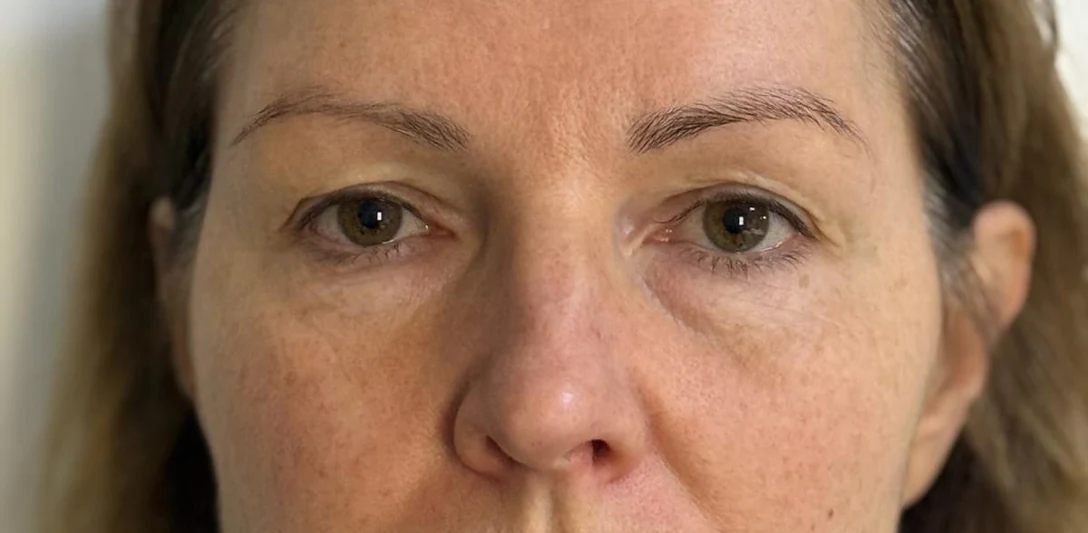
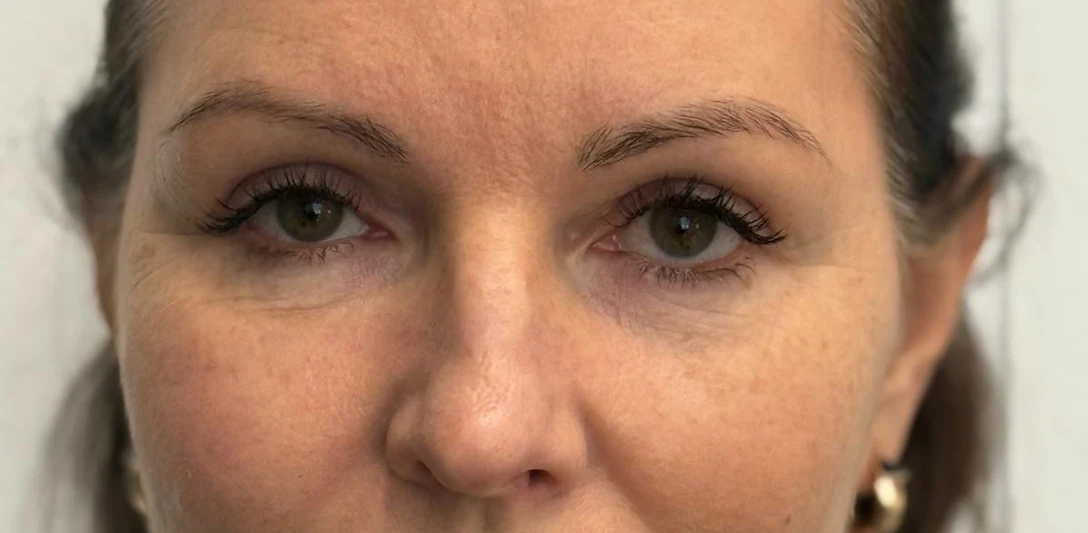
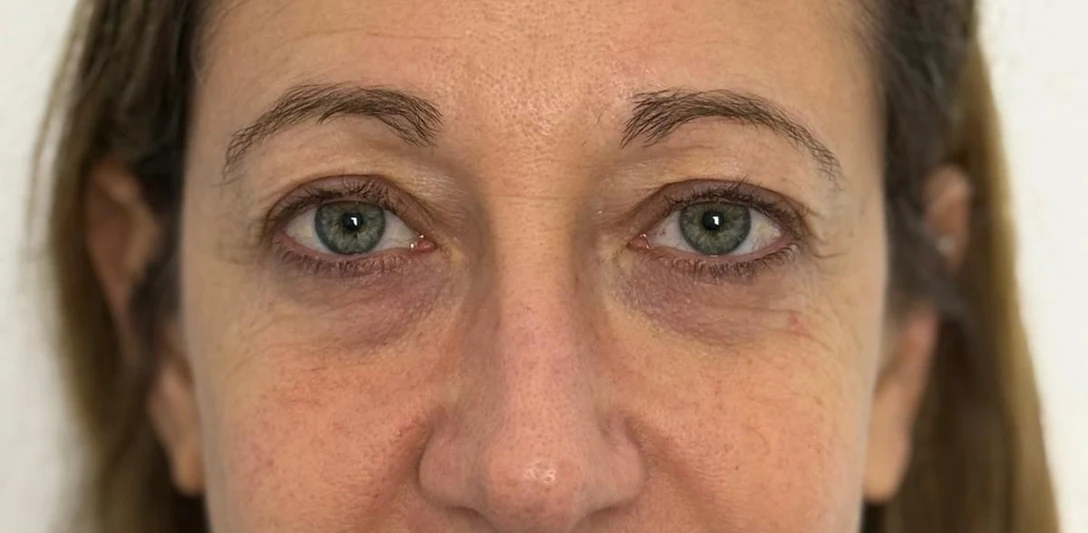
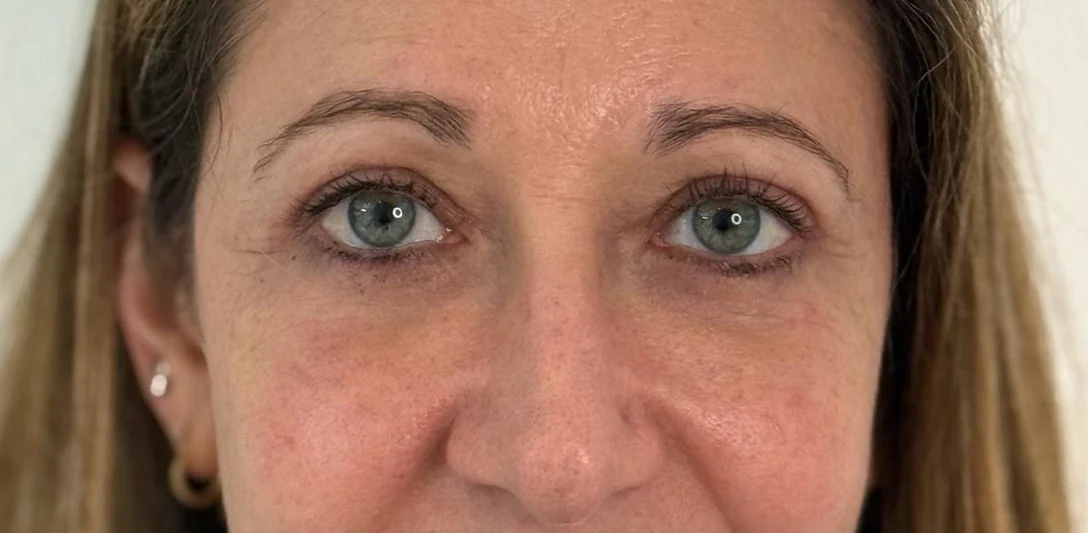
Photographs published with the patients’ written consent.
Understanding before deciding
One and the same appearance can have several causes. The consultation distinguishes in particular the skin, the fatty bags, the volumes, the position of the eyelids and ocular function.
A heavy upper eyelid may be linked to excess skin, to a low brow position or to a ptosis. Below the eye, a bag, a hollow under-eye circle and skin laxity call for different reasoning.
Dr Hayot, ophthalmologist, examines eye closure, the quality of the ocular surface and the symmetry of the eyes. Ophthalmological history, current treatments and any symptoms of dryness are also discussed.
The exchange clarifies the discomfort experienced, the expectations and the changes that are genuinely attainable. It also makes it possible to identify a contraindication, to propose an alternative or to conclude that no procedure is indicated.
Every procedure is approached according to the same reference points: indications, alternatives, course of the procedure, recovery, limits and risks.
Blepharoplasty brings together several procedures concerning the upper or the lower eyelids. The analysis covers the skin, the bags, the hollows and the support of the eyelid.
Open the detailed pageA marked skin fold, an inner bag or an asymmetry can alter the opening of the eyes. The examination also looks for a ptosis or a low brow position, because an isolated skin resection does not answer every cause.
Understanding the indicationsBags, excess skin, under-eye circles and loss of volume do not necessarily call for the same approach. The tone of the eyelid and its relationship with the eye are assessed before any discussion of an approach route or an associated procedure.
See the approachesThis approach holds that a hollowed appearance does not always call for the removal of tissue. A cautious restoration of volumes may be discussed when the examination reveals a lack of support, with the expected benefits and the limits explained in consultation.
The word “bag” designates a fatty bulge, distinct from a hollow or pigmented under-eye circle. A laser-assisted approach may be discussed in certain indications, without removing the need to assess the skin, the position and the support of the eyelid.
A descent of the brow can weigh down the eyelid without corresponding to a ptosis. Ptosis concerns the position of the eyelid itself and calls for a specific functional assessment by the oculoplastic surgeon.
The bag generally corresponds to a bulging of the fat compartments, whereas the under-eye circle may be hollow, coloured or mixed. Laxity concerns the skin or the support of the eyelid and is judged at the examination.
No. A low brow position, a ptosis or a functional cause may contribute to the appearance observed. The consultation determines whether a skin correction, another form of treatment or monitoring is coherent.
Their anatomy, their function and their risks differ. An indication may concern a single area, and the strategy is built from the signs observed rather than from a systematic template.
The interview covers the discomfort, the medical history, the treatments and the expectations. The examination assesses in particular vision, the ocular surface, eye closure, the position of the eyelids and their support.
Yes. Depending on the cause, abstention, monitoring or a medical option may be discussed. The alternative retained must remain compatible with ocular function and with a realistic objective.
The instructions and the follow-up depend on the procedure envisaged, on the medical background and on the course observed. A personalised timetable is determined in consultation and adjusted if the situation warrants it.
Every procedure carries general risks and risks specific to the eyelids, the ocular surface or healing. Their nature, their prevention and their management are explained according to the procedure envisaged.
The consultation makes it possible to define an objective and its limits, without guaranteeing a given appearance. Results vary according to anatomy, healing, the procedure performed and individual evolution.
This general content does not replace the ophthalmological consultation and the clinical examination required to discuss the options, the alternatives, the limits and the risks.
Dr Hayot’s registered specialty is ophthalmology. His activity as an oculoplastic surgeon concerns in particular the anatomy and the function of the eyelids, as well as their relationship with the eye.
A procedure does not correct every component of the eyes. Pigmentation, skin quality, a long-standing asymmetry or certain expectations may persist despite a technically appropriate procedure.
The expected benefit must be weighed against the constraints, the risks and the possibility of not operating. When an option outside the periorbital region is envisaged, it is performed four-handed with a surgeon qualified for these procedures.
Results vary from one person to another and cannot be guaranteed. The decision, the personalised timetable and the terms of follow-up are determined in consultation.
Continue exploring
Go further
Videos from the practice, loaded only on click (cookie-free YouTube).
The hollow under-eye circle Cover and estimates
At the practice in Paris 8e or by teleconsultation for a first opinion. The assistant will guide you and arrange your appointment.