
Lower blepharoplasty
Before / after
Real cases from the practice, unretouched, framed on the treated area only. Each result is individual and does not predict yours.
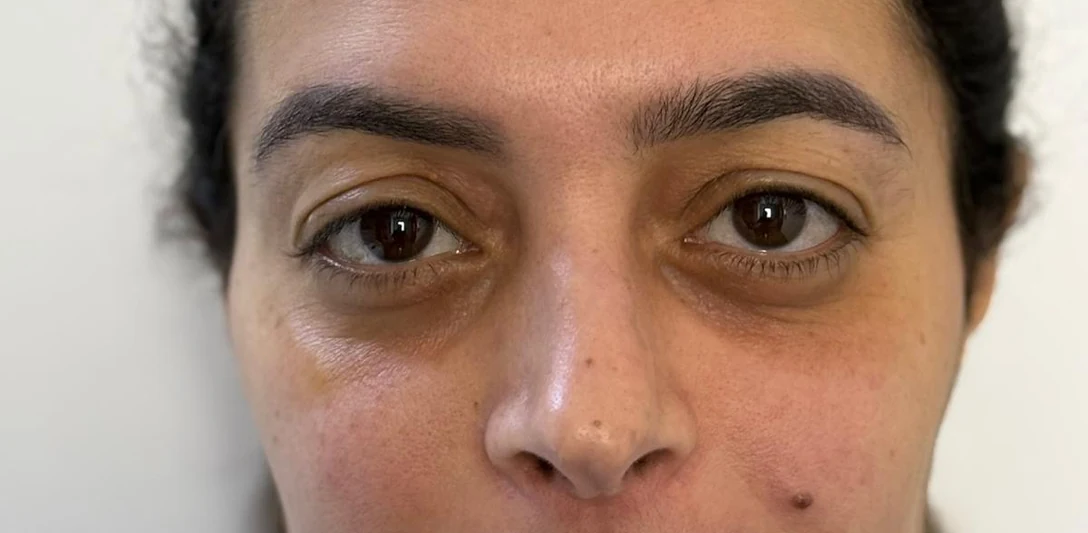
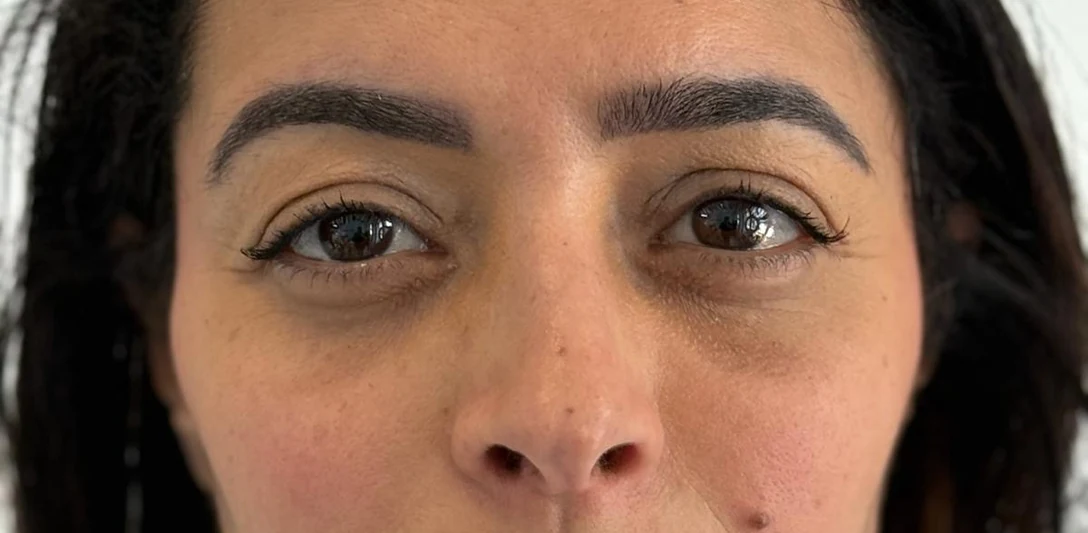
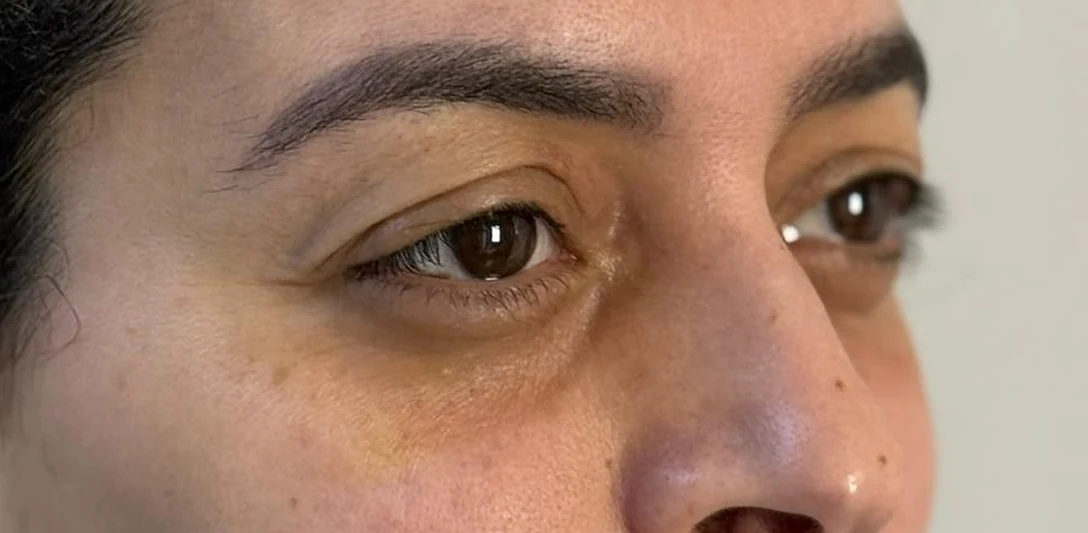
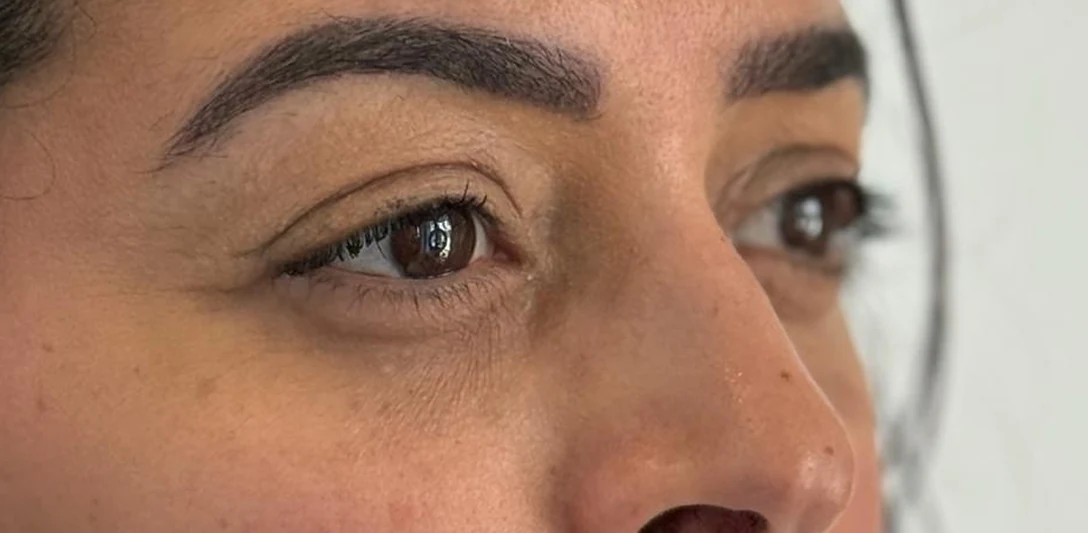
Photographs published with the patients’ written consent.

Dr Bernard Hayot, ophthalmologist, former chef de clinique, trained in oculoplastic surgery. Paris 8e · RPPS 10003926226.
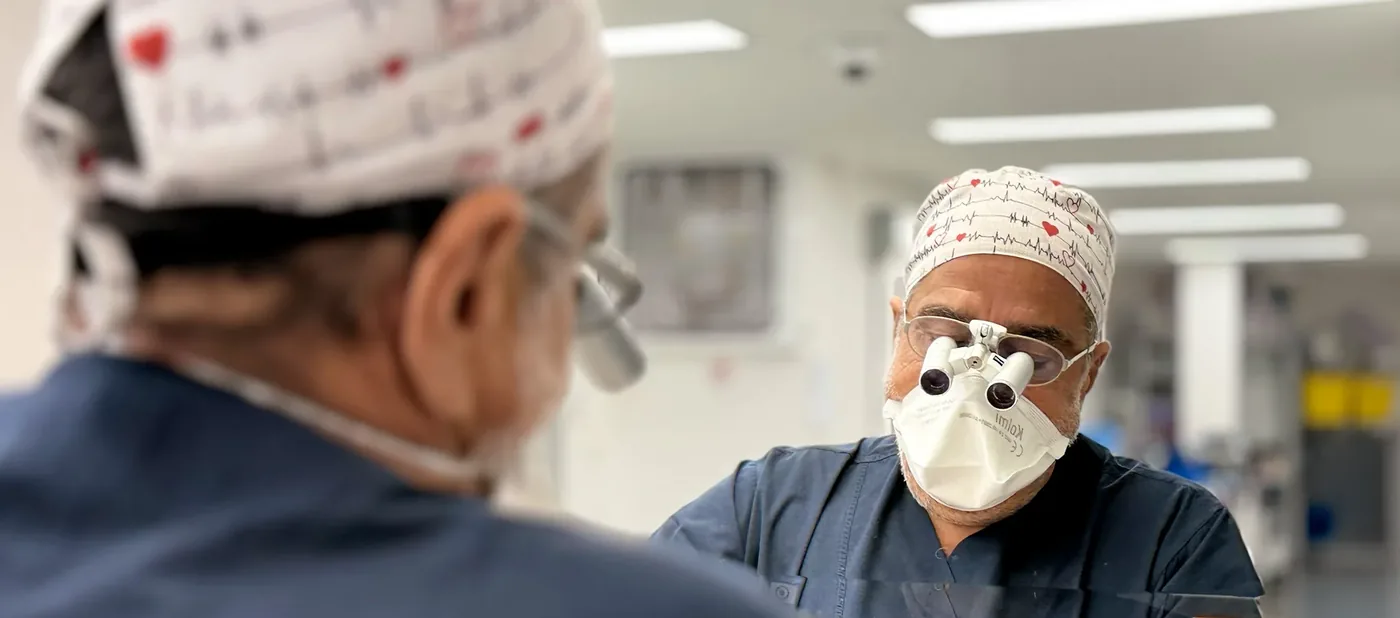
Dr Hayot on video
Videos from the practice, loaded only on click (YouTube without cookies).
Cosmetic surgery of the lower eyelid
Lower blepharoplasty was long performed by the anterior approach: a subciliary incision giving access to the fatty pouches by lifting the skin or the muscular plane. These techniques, now outdated, have serious drawbacks that we refuse to expose our patients to.
The subciliary incision creates internal retractile scars that lastingly alter the eyes: the eyelid is pulled downwards and the contour of the eye becomes distorted. To this is added injury to the nerve endings of the orbicularis muscle; its progressive atony, combined with the internal retractile scars, can alter the expression of the eyelids irreversibly.
This is why we remove the fatty pouches only by the transconjunctival approach: from inside the eyelid, without any visible skin incision. This approach eliminates all risk of retraction and fully preserves the natural morphology of the eyes.
Lower blepharoplasty is not limited to the removal of the fatty pouches. It also encompasses the treatment of dark circles, the tightening of the skin when it is in excess by means of a pinch blepharoplasty, or the improvement of skin quality by CO₂ laser. The protocol is defined on a case-by-case basis during the consultation.
WHAT IS A LOWER EYELID BLEPHAROPLASTY?
Lower blepharoplasty is a cosmetic surgical procedure intended to treat bags under the eyes as well as the wrinkled skin located beneath the eyes. In order to improve the overall appearance of the eyes, it is often recommended to combine this procedure with micro- and nano-lipofilling, which make it possible to treat hollow and pigmented dark circles at the same time. Your oculoplastic surgeon advises you on the treatment suited to your eyes.
An oculoplastic surgeon specialising in eyelid surgery and, more broadly, in surgery of the eyes, such as Doctor Hayot, enables you to devise a personalised treatment and a bespoke cosmetic procedure in which each problem is addressed specifically.
IN WHICH CASES SHOULD LOWER EYELID BLEPHAROPLASTY BE PERFORMED?
The lower eyelids tend to become wrinkled, crêpey and lax with age. This situation may also cause malar bags to appear at the base of the dark circles. Often it is the bags under the eyes that prompt patients to take the step of lower blepharoplasty. Dark circles are also a frequent reason for consultation and, from the age of fifty onwards, bags and dark circles are frequently addressed together in the cosmetic surgical procedure carried out on your eyelids.
You have bags around the eyes
Dr Hayot recommends removal of the fatty pouches and excess fat by the transconjunctival approach. The scar is therefore hidden in the conjunctiva, inside the lower eyelid. The incision with the laser scalpel avoids bleeding and hence the occurrence of postoperative haematomas. This absence of bleeding also gives the surgeon better visibility, an essential parameter for the success of the surgical procedure: removing the fatty pouches is a matter of precision, because what matters most is what is left behind and not what is taken away.
One of the effective treatments for filling hollow dark circles is micro-lipofilling, the injection of a small quantity of fat harvested from the patient, whether the dark circles are linked to the ageing of the eyelids or are constitutional (dark circles can be present from the age of 20).
When the dark circle is pigmented, Dr Hayot performs a nano-lipofilling in order to mask the colouring by making the skin of the lower eyelid less transparent. This very recent technique, still little practised in France, is the only valid method for treating pigmented dark circles.
You have bags and dark circles
This is the most frequent case with advancing age. The procedure combines removal of the fatty pouches by the transconjunctival approach with filling of the dark circles by micro-lipofilling.
Your lower eyelids are wrinkled
The skin of the lower eyelid creases when it loses its elasticity, without there necessarily being a pouch. The procedure combines removal of the fatty pouches by the transconjunctival approach with filling of the dark circles by micro-lipofilling (micro-injection of autologous fat beneath the skin).
THE RESULTS OBTAINED WITH A LOWER BLEPHAROPLASTY
An established fat pouch does not resolve with topical care: it comes from the orbit, not from the skin. That does not mean surgery is required for everyone — transient puffiness, a malar mound or a hollow tear trough call for other answers, and it is the examination that tells them apart.
After a lower blepharoplasty, “The correction of the fatty herniations and of the skin laxity lightens the lower eyelid region. The extent of the change varies according to anatomy and cannot be quantified in advance.” The eyelids are smoothed, toned, flattened and enhanced, without any change to the eyes, when the surgical steps are perfectly mastered.
Social downtime lasts approximately 10 to 15 days on account of bruising and haematomas and of postoperative swelling, which is greater after a lower eyelid lift. After this period of convalescence, the result looks natural and is imperceptible to those around you. Lower blepharoplasty offers patients genuine physical and psychological relief.
THE ADVANTAGES OF LOWER BLEPHAROPLASTY
Lower blepharoplasty makes it possible to treat the entire lower area of the eyes in a single procedure! The eyelids are smoothed, flattened and enhanced.
- The procedure is calibrated according to the morphological indications of each patient, without any unnecessary invasive step. Pinch blepharoplasty is the ideal operative method if the lower eyelid is simply crêpey, the lower eyelid lift being of interest only when the orbicularis muscle must be repositioned and malar bags removed.
- The scars following this surgery are concealed (removal of the fatty pouches by the transconjunctival approach) or very carefully concealed in the lash line.
- The use of the laser scalpel, which coagulates at the same time as it incises, avoids bleeding of the lower eyelids and hence postoperative haematomas and bruising.
- Micro-lipofilling is one of the effective methods for filling dark circles at the level of the lower eyelids. Dr Hayot, a specialist in eye surgery, formally advises against hyaluronic acid injections in the dark circles. Experience shows that the product resorbs very poorly in this barely mobile area of the face and may, in time, form pouches. Moreover, as the skin of the dark circle is very thin, hyaluronic acid can become visible and give a bluish tinge (Tyndall effect) to the lower eyelids.
- Nano-lipofilling is a recent and highly innovative technique, mastered by few practitioners, which makes it possible to treat pigmented dark circles effectively.
HOW A LOWER BLEPHAROPLASTY PROCEDURE PROCEEDS WITH DR HAYOT
Patients are received for an initial consultation with the doctor for a clinical examination of the eyelids and of the face. Doctor Hayot has practised blepharoplasty for more than 30 years. His experience therefore allows him to advise you on the procedures best suited to your needs and to establish a bespoke treatment plan. Certain contraindications are possible, in particular for individuals with certain ocular conditions such as glaucoma or diabetic retinopathy, and those with serious uncontrolled health problems. In such cases, Dr Hayot recommends avoiding this cosmetic surgery.
Advice before the surgical procedure
The purpose of this advice is to minimise the risks and to prepare patients, both physically and mentally. Clear information and open communication with Dr Hayot are the pillars of approaching the surgical procedure with confidence and in the best possible conditions. It is recommended to stop consuming tobacco and alcohol several weeks before the procedure, as this may affect the healing of the scars. It is also advisable to limit the intake of medicines and supplements that may increase bleeding, such as aspirin or ibuprofen.
How the surgical procedure proceeds
You arrive on the morning of the procedure, having fasted for 8 hours. General anaesthesia or neuroleptanalgesia (deep local anaesthesia) is administered. The procedure depends on the indications of each patient. The duration of the procedure is 45 minutes to 1 hour 30 minutes depending on the arrangements.
- For removal of the fatty pouches (except malar bags), the incision is made inside the eyelid.
- For a pinch blepharoplasty, it is made in the lash line (the scar is concealed in the line of the eyelashes) and the surgeon removes 1 to 2 millimetres of excess skin without lifting the deep tissues.
- For a lower eyelid lift, the surgeon incises at the very edge of the lashes and passes beneath the eyelid muscle (orbicularis oculi muscle) in order to tighten it.
- For the treatment of dark circles, the surgeon uses the micro-lipofilling technique (injection of fat) and nano-lipofilling when they are pigmented. The lower eyelid lift is often combined with a lipostructure of fat at the level of the cheekbone in order to support the lifted eyelids and soften the malar bags.
Postoperative advice
Swelling and bruising last 10 to 15 days. A good week of rest may speed up the healing process. The eye drops prescribed prevent irritation of the cornea, the sensation of dry eye and the risk of conjunctivitis. The application of ice-cold compresses during the following 48 hours helps the swelling to resolve. Wearing compression stockings may be advised in the first few days if you suffer from circulatory problems. Do not expose yourself to the sun and do not use UV sessions for 3 weeks. Do not wear make-up until the stitches are removed (between the 6th and the 8th day), where applicable.
The particular case of malar bags
There is one specific situation in which we resort to the anterior approach: the treatment of severe malar bags or of festoons of the orbicularis muscle. In these particular cases, it is necessary to lift the orbicularis muscle, to tighten it and to anchor it to the periosteum, a submuscular technique that we most often combine with a complementary lipostructure.
Upper blepharoplasty
Upper blepharoplasty is a surgical procedure intended to remove excess skin and/or fat around the upper eyelids, in order to provide a cosmetic correction and to restore bright, rejuvenated eyes.
Additive blepharoplasty
Addition blepharoplasty is a surgical technique that consists in adding volume to the periorbital region in order to rejuvenate the eyelids and the contours of the eyes. It aims to fill hollows and wrinkles in order to refresh the eyes.
Pinch blepharoplasty is a delicate surgical method that makes it possible to remove excess skin and bags under the eyes through small, discreet incisions. This discreet correction allows you to regain natural eyes full of charm.
Lipofilling makes it possible to restore volumes lost and wrinkles caused by cutaneous ageing. Using the body’s own fat is an ideal solution that rejuvenates your face and naturally restores the volumes that have been lost.
Should upper eyelid surgery be carried out at the same time?
Every patient has their own characteristics of skin ageing. Depending on the reason for which you consult Doctor Hayot (eyelid laxity, dark circles, bags, wrinkles under the eyes, laxity of the skin of the face) and on your objectives, your surgeon will determine the cosmetic surgical technique or techniques to be used in order to obtain optimal natural rejuvenation. It is therefore possible that he will advise you on a treatment of the lower eyelid, of the upper eyelid, or a combined action of the two techniques.
Price of lower eyelid blepharoplasty
The price of a lower eyelid blepharoplasty varies according to the steps and techniques used. At the end of the first consultation, a complete and precise quotation will be given to you, setting out all the prices. The prices quoted include the fees of the surgeon and of the anaesthetist, the costs relating to the operating theatre, to the hospital staff, and to the products and materials used.
Lower blepharoplasty is a surgery whose cost is not covered by the French social security system, as it is a procedure with a cosmetic purpose. On the other hand, in the context of reconstructive eyelid surgery, when the patient’s good vision is compromised, it is possible that part of the costs incurred may be reimbursed by the patient’s complementary health insurance.
Can Doctor Hayot be consulted as an oculoplastic surgeon even if we do not live in Paris or its region?
You can consult Doctor Hayot from all cities such as Créteil, Nice, Lille, Neuilly-sur-Seine and anywhere in France. You need only make an appointment to consult your doctor at our practice in Paris or to arrange a remote medical teleconsultation. Doctor Hayot is attentive to your wishes and will discuss your eyelid surgery plans with you and put in place a bespoke cosmetic correction protocol so that you may regain eyes that express all your natural beauty.
Protocols, dosages and fees are never published here: they are determined at the consultation, after examination, and provided in writing in the quotation.
This page is for information purposes. It does not replace a consultation: each situation is assessed on examination.