
Beauty and make-up tips after blepharoplasty
Written and reviewed by Dr Bernard Hayot, ophthalmologist, RPPS 10003926226.
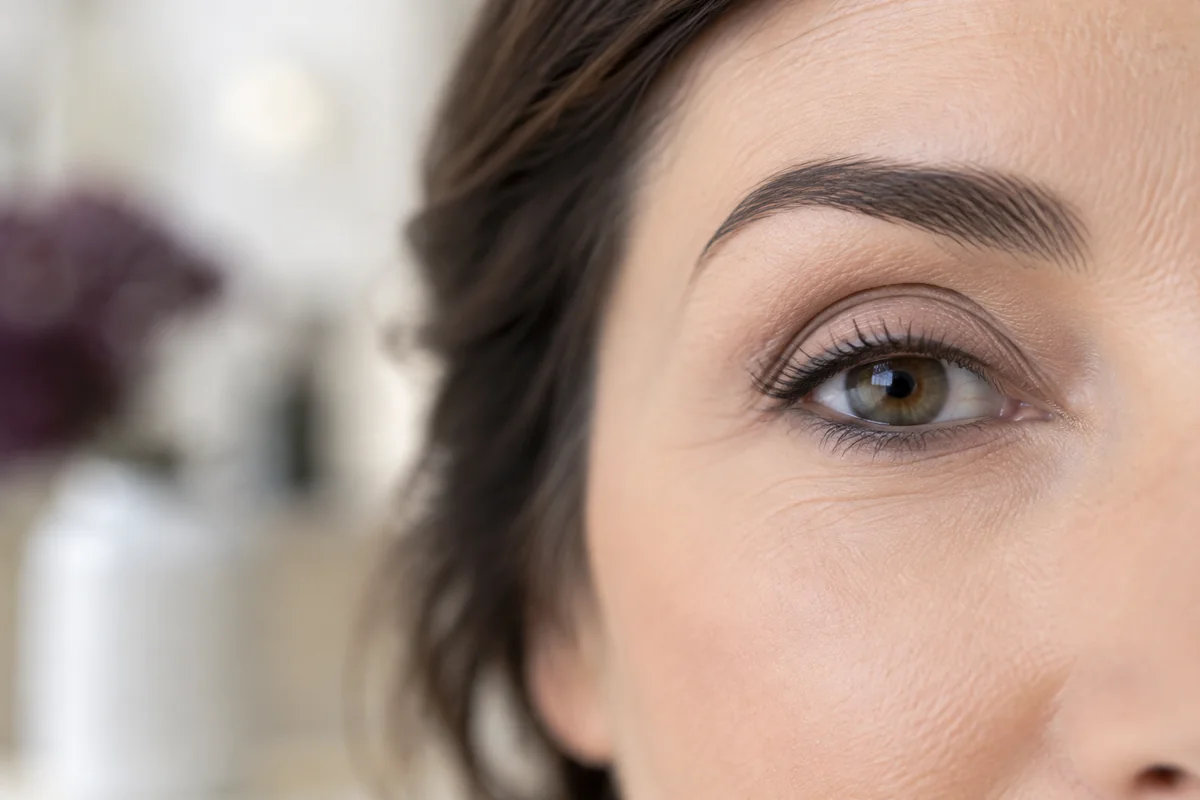
What is blepharoplasty?
Blepharoplasty, or eyelid plasty, can be compared to a genuine eyelid lift, in which the eye surgeon restores tension to the tissues and removes excess skin and the fat of the bags, for example.
For a complete and natural rejuvenation of the eyes, other procedures are sometimes combined with it, such as treating expression lines (glabellar wrinkles, crow’s feet and so on) or filling the dark circles.
Each time, the surgeon proposes a tailor-made solution to rejuvenate the eyes:
- Upper blepharoplasty treats the two upper eyelids, while lower blepharoplasty treats the lower eyelids only; all four eyelids can be treated at the same time.
- Blepharoplasty without a scar is performed through the conjunctiva, for example to remove under-eye bags with an ultra-pulsed CO₂ laser, whereas blepharoplasty with a scar involves a very fine skin incision, which has to follow the natural edge to within a millimetre before disappearing into a small crow’s foot line so as to remain invisible.
The secret of a successful blepharoplasty is a meticulous clinical examination beforehand, in order to assess the elasticity of the skin and not to underestimate any underlying loss of volume. This determines the surgical techniques to be used and is intended to ensure a wholly natural result.
How long before you can wear make-up after a blepharoplasty?
Eyelid surgery often leaves slight bruising or swelling of the tissues for a few days. It is advisable to protect the operated area with sunglasses, and to apply a cold mask if necessary, in order to reduce redness and swelling.
The aim is to conceal these small bruises with make-up quickly, so that the patient can return to a normal social life. This is all the more true as one of the frequent reasons for surgery is a hooded upper eyelid, which until then has made attractive make-up impossible, hence the entirely legitimate impatience.
Wearing make-up after surgery becomes a real pleasure again, provided you use non-irritating products and respect a certain post-operative interval.
That interval depends on the techniques used.
- In the case of scarless blepharoplasty, the transconjunctival incision means there is no suture on the skin, so make-up can often be applied after 24 to 48 hours.
- In the case of blepharoplasty through a skin incision, you need to wait until the sutures have been resorbed or removed and the skin has healed and is free of scabs. That takes 5 to 8 days. Make-up should not be applied before the sutures are removed, as it may form an occlusive film over the scar and impair healing.
How should you apply make-up and care for your eyes after a blepharoplasty?
Blepharoplasty often produces striking results, rejuvenating the eyes by up to ten years and restoring their tone, radiance and vitality.
Make-up can then enhance them further, accentuating their contours and their sensuality.
Throughout the healing phase, it is important to follow the instructions carefully so that the eyelids reshape optimally:
- no make-up and no water on the scar for the first 5 days;
- no swimming pool or sauna for 1 to 3 weeks;
- no intense UV exposure for at least 3 weeks.
Once the blepharoplasty has healed, Dr Hayot recommends adapting your make-up or eye contour products, following 3 principles:
- no harsh or irritating products, which can cause chronic inflammation and accelerate the ageing of the tissues;
- moisturise the eye contour well, with products based on fluid hyaluronic acid for example, which nourish the dermis deeply;
- protect yourself from the sun, as UV rays are the main factor in the ageing of the tissues.
Where a micro-lipofilling has also been carried out, it is advisable to maintain a healthy lifestyle in order to keep your weight stable.
By combining quality make-up with regular care, patients who have had a blepharoplasty can make the most of their eye rejuvenation for at least 10 years.
This page is for information only. It does not replace a consultation: every situation is assessed on examination.