
Comfortable hyaluronic acid injections: Juvéderm® Ultra
Written and reviewed by Dr Bernard Hayot, ophthalmologist, RPPS 10003926226.
An aesthetic treatment that lasts, without surgery
Today, thanks to advances in aesthetic medicine, all types of wrinkles can be treated without surgery, using localized injections alone.
In a single session, the face can be “rejuvenated” in a comprehensive and harmonious way.
Expression wrinkles are treated as soon as they appear with botulinum toxin (or Botox®).
Hyaluronic acid injections are used to treat the loss of facial fat and the creasing of the skin, as well as jowls and marionette lines. The contours of the mouth are treated with a combination of botulinum toxin and hyaluronic acid.
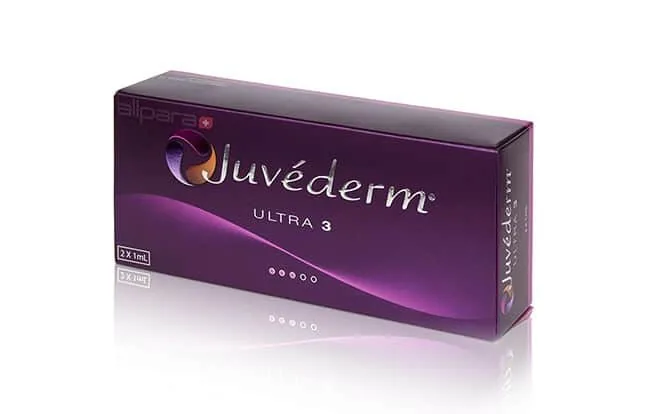
All you need to know about Juvéderm® Ultra
The addition of lidocaine gives patients greater comfort during and after the injection.
The flexibility of the gel means it can be injected through the finest needles, which reduces pain and bruising.
The cross-linking process ensures an optimal volumizing capacity for up to 18 months.
How is hyaluronic acid used?
Hyaluronic acid is injected intradermally with a very fine needle. Injected under a wrinkle, it plumps up the tissues and restores the smooth, natural appearance of the skin. Treating wrinkles with hyaluronic acid is generally straightforward, with results visible immediately and no scarring.
Why fill wrinkles with hyaluronic acid?
Hyaluronic acid has been used for many years in intraocular surgery, where intraocular injections help maintain ocular tone during ophthalmological procedures. Its excellent tolerance in an organ as fragile as the eye led to the development of its intradermal use.
It is non-allergenic, so no prior testing is required, and it is resorbable, therefore not permanent. It is also very well tolerated, being a constituent of the human body.
In which wrinkles is hyaluronic acid injected?
- nasolabial folds;
- marionette lines;
- perioral wrinkles, in the white lip around the mouth;
- in addition to, or in combination with, botulinum toxin injections: frown lines, crow’s feet and horizontal forehead wrinkles;
- the mouth: around the lips, to redefine the lip contour and prevent lipstick from bleeding, and in the lips themselves, to give them volume.
What happens after a hyaluronic acid injection?
Temporary redness may occur, and disappears after 24 to 48 hours. Slight oedema may also occur, but this too is temporary. It can be reduced by placing small ice cubes on the treated areas immediately after the injection. Other side effects have been reported: pain at the injection site, itching, discoloration and sensitivity at the injection site. They do not last more than 2 or 3 days.
Is there any danger?
It is in fact one of the safest dermal fillers available.
How long does the result last?
On average, and depending on the product used, results last for 9 months. In some cases they can last up to 12 months.
An annual maintenance visit is recommended in order to benefit from the cumulative effect of the product, so that a second session after around 9 months should require less product. Most patients choose to have their second session between 6 and 12 months after the first.
Contraindications
In cases of skin disease (to be treated first), sensitivity to hyaluronic acid, autoimmune disease or diabetes.
This page is for information. It does not replace a consultation: every situation is judged on examination.