
What do I need to know before a blepharoplasty?
Before / after
Real cases from the practice, unretouched, framed on the treated area only. Each result is individual and does not predict yours.
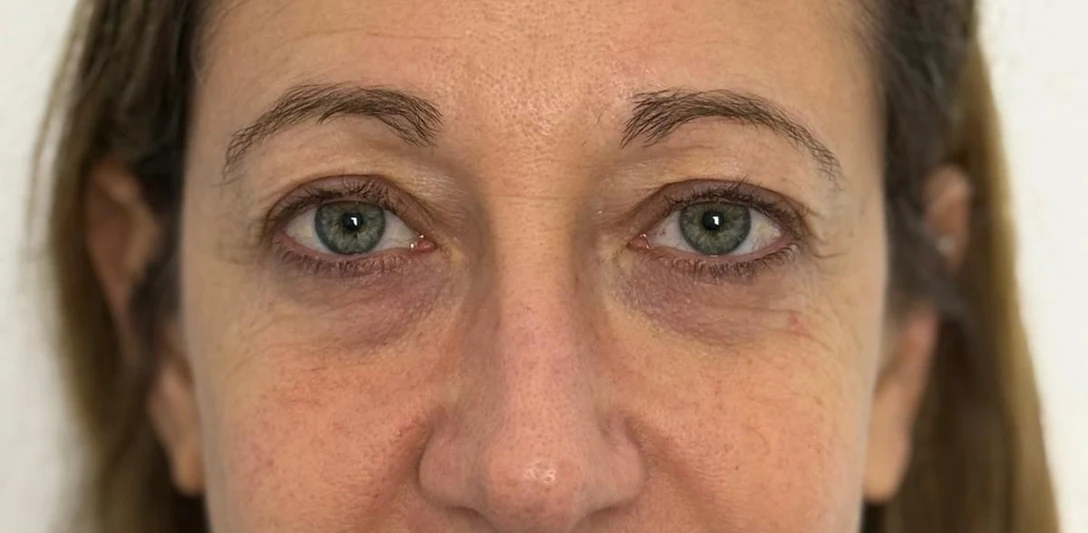
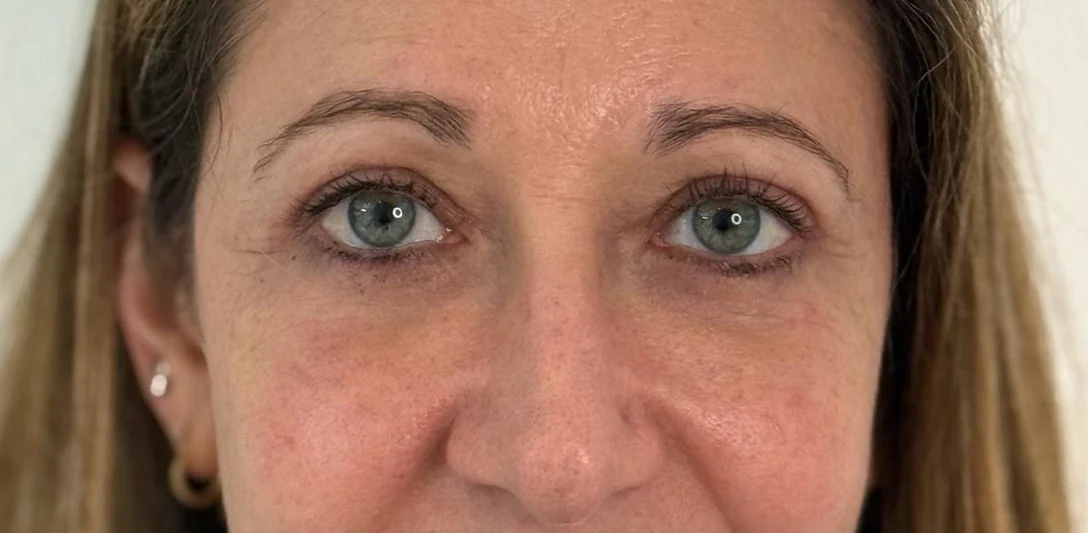
Photographs published with the patients’ written consent.
Written and reviewed by Dr Bernard Hayot, ophthalmologist, RPPS 10003926226.
What is a blepharoplasty in cosmetic surgery?
Blepharoplasty is an eyelid & oculoplastic surgery procedure used to treat defects of the upper and lower eyelids. There are several types of blepharoplasty.
Lower blepharoplasty.
Lower blepharoplasty is performed by an oculoplastic surgeon under local or general anaesthesia, depending on the patient’s needs. The surgeon operates on the eyelid using a transconjunctival approach: the procedure is carried out inside the lower eyelid to remove excess fat.
Upper blepharoplasty
Upper blepharoplasty is performed under local anaesthetic. The oculoplastic surgeon operates on the upper eyelid to remove the excess skin causing discomfort, as well as the internal fat pad of the upper eyelid. After the operation, the scars remain hidden by the natural crease of the eyelid and are ultimately concealed to the naked eye. Sutures are required for this type of blepharoplasty and are removed by the surgeon a few days after the operation.
Addition blepharoplasty or lipofilling
Addition blepharoplasty involves a micro-fat graft within the eyelid. This technique takes the opposite approach to the two described above. The fat added is first harvested from another area of the patient’s face. The aim of addition blepharoplasty is to harmonise eyelid volumes by filling in hollow areas.
Pinch blepharoplasty
Pinch blepharoplasty is a minimally invasive technique. The procedure involves pinching out the excess skin, or the bag, usually found on the lower eyelid.
At what age can eyelid surgery be performed?
There is no age limit for blepharoplasty. Apart from major medical problems, blepharoplasty is suitable for adults over the age of 18 who wish to enhance the beauty of their eyes. It is worth noting that in very young patients, the effects of ageing may make repeat surgery necessary later on.
The average age of blepharoplasty patients is between 40 and 50. To ensure that the effects of blepharoplasty last, it is recommended that the operation be performed after the age of 35.
What do I need to know before a blepharoplasty?
Before undergoing blepharoplasty, every patient must attend a consultation with the oculoplastic surgeon. During this initial consultation, the patient can discuss the details of the operation with the doctor, together with their wishes and needs.
Here is some useful information to know before a blepharoplasty; it will also be given to you during your consultation:
- It is recommended that patients take about a week off work after blepharoplasty.
- During this initial consultation, the oculoplastic surgeon takes medical photographs of the patient. Patients are advised not to wear make-up, so that these photographs are as informative as possible.
- Patients should ask about any medication they are taking, to make sure it is compatible with the operation.
- Blood tests are mandatory prior to surgery.
- Patients must undergo an ophthalmological check-up prior to surgery.
- It is recommended that patients stop smoking one month before the procedure.
- Patients are advised not to take aspirin or anti-inflammatory drugs in the 10 days before the operation.
- A minimum cooling-off period of 15 days is required between the first consultation and the blepharoplasty.
This page is for information. It does not replace a consultation: every situation is judged on examination.