
Natural treatment of puffy eyes: technique, results and post-operative care: a complete guide
Written and reviewed by Dr Bernard Hayot, ophthalmologist, RPPS 10003926226.
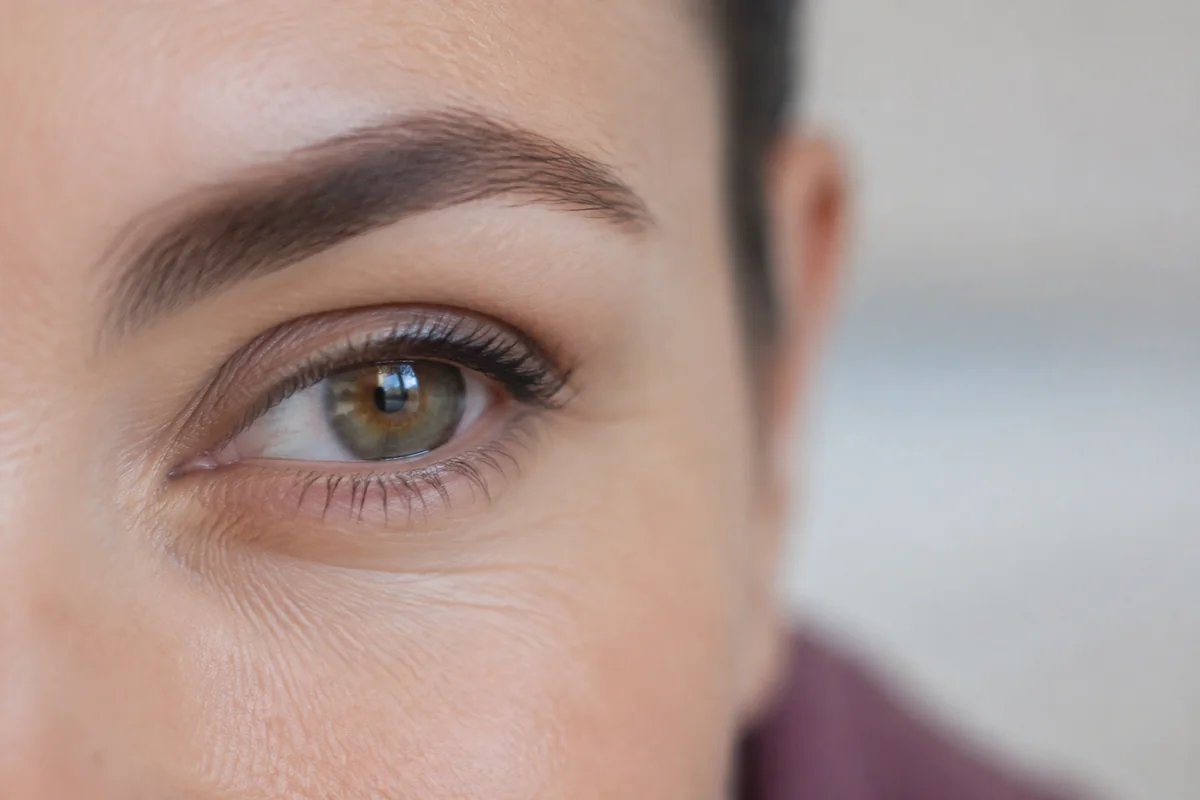
Natural treatment of puffy eyes: under-eye bags are one of the most frequent reasons for consultation at our eyelid and oculoplastic practice in Paris.
As a former Specialist Chief of Clinic in eyelid surgery, I see patients every week who come with the same aesthetic concern, one that troubles them deeply: this tired look, these puffy eyes that make them appear older than they are.
The natural treatment of puffy eyes covers all the approaches that aim to reduce this swelling, whether conservative methods or surgical solutions suited to each case.
Patients often describe how uncomfortable this makes them feel: they feel weakened and less vibrant, and this appearance troubles them in their professional as well as their personal life. Understanding the causes of puffy eyes in the morning is essential in order to propose appropriate care.
This prevalence rises with age, and many of these patients have tried different solutions before coming to see us. Natural remedies for under-eye bags are often the first attempt: cold compresses, home-made masks for puffy eyes using cucumber or tea, and lymphatic drainage massage.
These methods can help temporarily, especially where fluid retention is significant, but they do not treat the root cause of the problem.
How to reduce puffy eyes naturally depends essentially on the origin of the swelling: if it is a build-up of retro-orbital fat, these solutions will remain ineffective. This is why a precise preliminary assessment is fundamental before undertaking any treatment.
This is also why I always advise my patients to begin with a thorough consultation, at which we assess together the type of bags (fatty, fluid or mixed), the quality of the eyelid skin and the patient’s real expectations. In some cases, natural treatment may be enough if the problem is mild and recent.
For more established or more pronounced cases, we discuss surgical options such as lower blepharoplasty, which gives durable and natural results when the indication is properly established.
My role is to guide you towards the solution best suited to your case, without unrealistic promises. Combining a healthy lifestyle, appropriate care and, if necessary, a targeted procedure allows you to regain a fresh and rested look.
Every patient has a unique anatomy and specific expectations. The results described are indicative and may vary according to your medical situation and your personal characteristics. A quotation is drawn up at the consultation, after a thorough clinical examination.
What is the natural treatment of under-eye bags?
On clinical examination I identified a significant fluid component associated with a weakened skin barrier.
We put in place a protocol combining manual lymphatic drainage with appropriate topical treatments. Within three months the morning swelling had reduced significantly, and the patient no longer feels the self-consciousness that stopped her looking at herself in the morning.
Definition
The natural treatment of under-eye bags covers all the non-surgical approaches that aim to reduce under-eye bags and eyelid swelling. These treatments include cold compresses, draining massage, caffeine-based topical products and changes in lifestyle.
The word natural refers to natural ingredients such as cucumber, cooled tea or aloe vera, traditionally used for this purpose. A study in the Journal of Clinical and Aesthetic Dermatology (2020,
This approach suits people with moderate swelling and no true herniation.
Principles
The first principle of natural treatment is to stimulate lymphatic drainage. Puffy eyes in the morning are often the result of fluid accumulating overnight. Gentle massage around the eye helps the circulation and limits stasis.
The second principle is the application of cold, which constricts the blood vessels and reduces the seepage of fluid.
Cold masks, or gauze compresses soaked in cold water and applied for 10 minutes each morning, are a simple and effective method. The third principle relies on topical vasoconstrictors such as caffeine or arnica, which temporarily reduce tissue volume. It is important to note that these treatments are symptomatic and do not correct a true underlying hernia.
The causes of puffy eyes in the morning are many and often interlinked. Lack of sleep, fluid retention, tissue ageing and allergies are the most frequent factors.
A natural remedy for under-eye bags must target your particular cause.
A home-made mask for puffy eyes using chilled cucumber slices, applied for 15 minutes each evening, may help if the problem is functional. If the excess is due to a true fatty hernia, however, natural treatment will be ineffective.
I always recommend an 8-week trial of natural treatment before considering a surgical solution.
These approaches are particularly suitable for younger patients, under 35, with no marked excess skin. This approach is not suitable if you have a true eyelid hernia or a significant excess of skin, as the results will be disappointing.
Indications and ideal candidates
This section answers a fundamental question raised in consultation: is this treatment right for my situation? Unlike surgery, which has strict indications, the natural treatment of under-eye bags suits a very wide range of people.
I regularly see patients with moderate puffiness around the eyes who are looking for a non-invasive solution before considering eyelid and oculoplastic surgery.
Ideal candidates generally share several characteristics. My patients for this type of treatment are on average between 35 and 55 years old, with tissue that is still elastic.
She had hollow under-eye circles with moderate fluid retention, and the assessment confirmed that her skin responded well to hydrating stimuli. The preliminary diagnosis must rule out underlying conditions such as hypothyroidism or chronic allergy before any treatment is considered.
The cause of puffy eyes in the morning largely determines the indication. When the swelling is due to fluid retention overnight, topical treatments and natural remedies for under-eye bags are particularly effective.
If the problem is caused by significant fat herniation or marked skin laxity, however, natural treatment alone will not be enough. I systematically perform a digital compression test to assess the fluid component before recommending an approach.
Absolute contraindications must be identified before any treatment. This approach is not suitable for a patient with active blepharitis, a skin infection of the eyelids, or a history of severe allergic reaction to the ingredients used. It should also be known that home-made masks for puffy eyes based on fresh food can carry a risk of infection if they are not prepared in adequately hygienic conditions. Patients with diabetes or a weakened immune system require particular care.
Realistic expectations are a crucial part of the pre-treatment assessment. The natural treatment of under-eye bags aims to improve the appearance of puffy eyes gradually, not to eliminate wrinkles or pigmented dark circles completely.
In my experience, patients who understand this distinction obtain more satisfactory results.
A combined approach, associating home care with sessions at the practice, gives optimal results in selected candidates. People over 65 with a significant excess of skin are generally not good candidates for this method and would benefit more from a surgical consultation with an oculoplastic surgeon.
Technique and procedure
Before
Preparation is a fundamental step in optimising the effectiveness of the natural treatment of puffy eyes.

I systematically ask my patients to cleanse the eye area carefully with a gentle, alcohol-free cleanser, to remove any trace of make-up or sebum that could hinder the penetration of the active ingredients.
It is preferable to do this in the morning, as puffy eyes are often more pronounced on waking.
This allows a better assessment of the initial condition and an adjustment of the intensity of the treatment. It also gently stimulates the local lymphatic circulation from the start of the session, which optimises the results.
During
Several techniques can be combined during the natural treatment of puffy eyes, depending on the severity of the problem and the patient’s skin type. The first step is to apply cold compresses prepared at home, made of gauze soaked in cornflower floral water
or in strong green tea, which I recommend leaving in place for 8 to 12 minutes, in line with studies on periorbital oedema.
Next, I gently massage the eye area with upward circular movements, using a cream based on caffeine and arnica, two ingredients whose vasoconstrictive effect is documented in the literature. The massage should last about 2 minutes per eye, with particular attention to the inner corner, where lymphatic stasis is often greatest.
For patients who ask me how to reduce puffy eyes naturally in a more intensive way, I suggest a home-made mask for puffy eyes based on grated cucumber and honey, applied for a maximum of 15 minutes to avoid any risk of skin allergy.
It is important to know that this approach is not suitable for a patient with an active skin infection, eczema of the eye area or rosacea, as the active ingredients could worsen the inflammation.
Protocols, dosages and fees are never published here: they are determined at the consultation, after examination, and provided in writing in the quotation.
This page is for information. It does not replace a consultation: every situation is judged on examination.