
Blepharoplasty: aesthetic eyelid surgery
Before / after
Real cases from the practice, unretouched, framed on the treated area only. Each result is individual and does not predict yours.
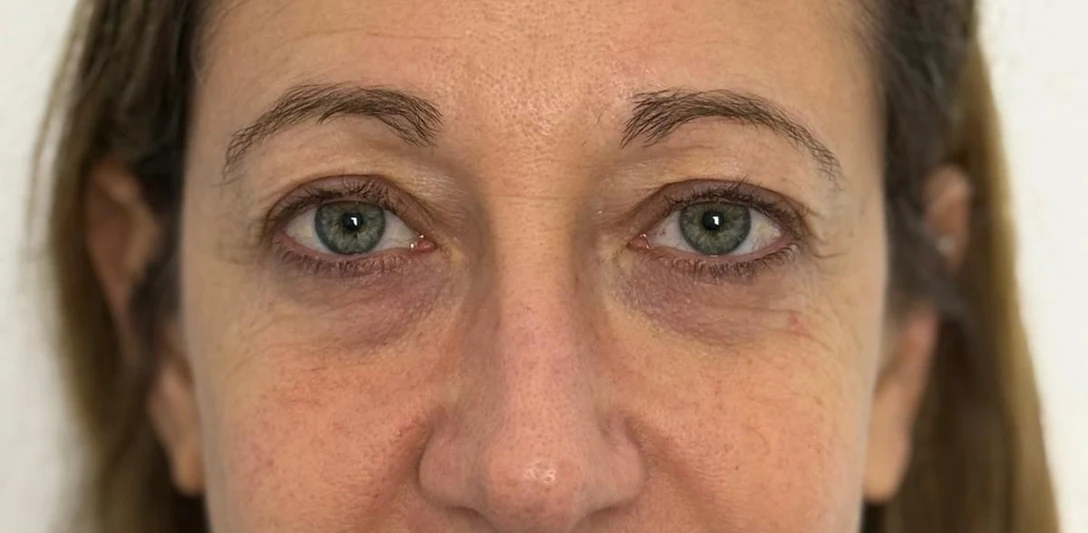
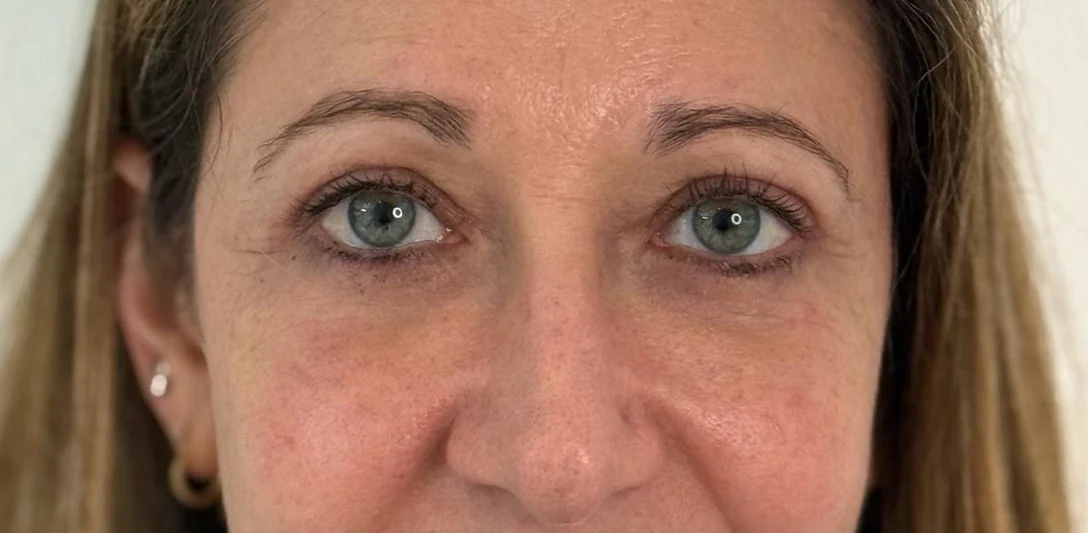
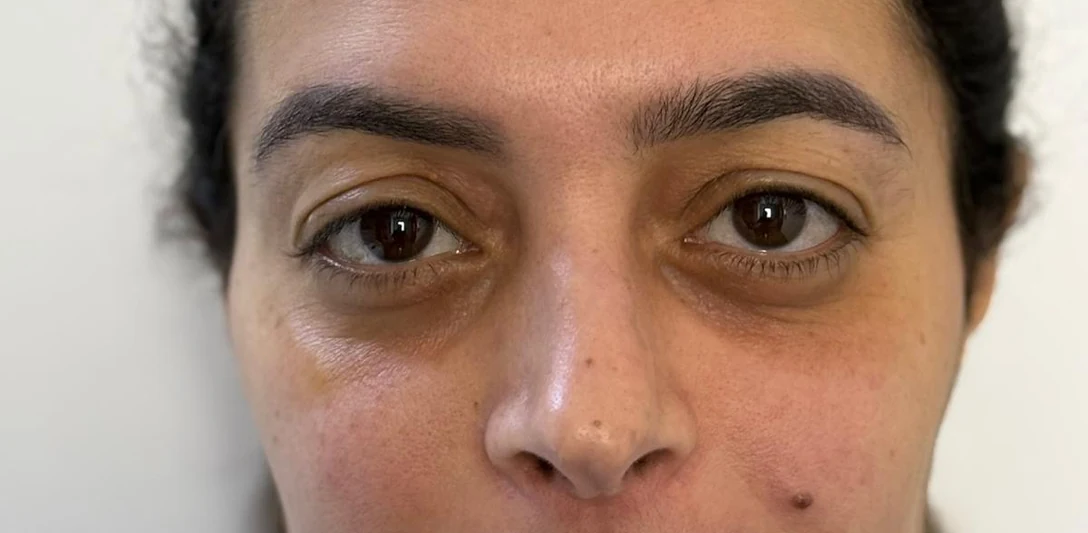
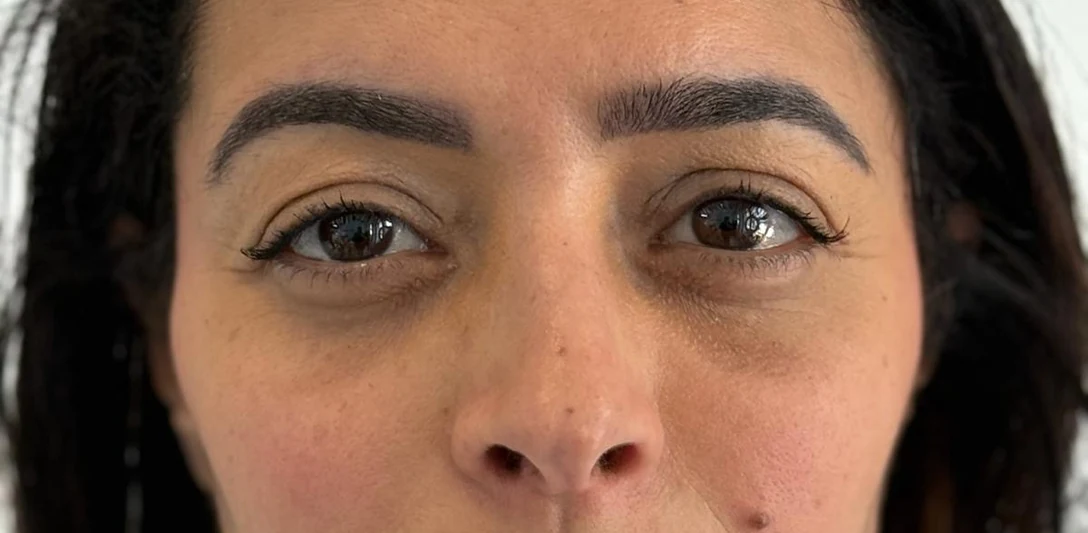
Photographs published with the patients’ written consent.
Written and reviewed by Dr Bernard Hayot, ophthalmologist, RPPS 10003926226.
What is upper eyelid blepharoplasty?
Blepharoplasty of the upper eyelids is an increasingly popular procedure among people in their forties, as it is one of the effective techniques for rejuvenating the eyes. Performed by an oculoplastic surgeon specialising in eyelid surgery, this low-risk procedure restores life and vitality to the face without altering its original expression.
Blepharoplasty of the eyelids is as popular with men as with women. This eyelid surgery can be either cosmetic or restorative, depending on the type of eyes.
Dr Hayot treats the cocker-spaniel look, doe eyes, protruding eyes, round eyes and every other type of eye, with a wide range of eyelid and oculoplastic surgery techniques.
What is lower eyelid blepharoplasty?
Like upper blepharoplasty, this operation is designed to rejuvenate the eyes by making the eyelid firmer. The best technique for a natural result is to re-tension the eyelid muscle. This is known as a “subpalpebral lower eyelid lift”. Lower blepharoplasty offers many advantages when it is performed with a laser scalpel. In particular, it avoids the risk of round eyes and removes the “orbicularis bulge” under the eye.
How is a blepharoplasty performed?
At an initial consultation with the oculoplastic surgeon, the patient is given a quotation, an informed consent form and a full description of how eyelid surgery unfolds. During this first meeting, the oculoplastic surgeon answers every question and concern about the operation.
The specialist makes a precise diagnosis of the type of eyes and of the ageing of the eyelids. A range of techniques is used to analyse the indications for blepharoplasty precisely. The surgeon often observes bags accompanying the sagging skin. In such cases, the bags can be removed with a laser scalpel during the same operation. If, on the other hand, the patient has hollow dark circles, Dr Hayot will propose lipofilling of the dark circles.
On the day of the operation, the patient generally comes to the clinic in the morning on an empty stomach and leaves in the afternoon, accompanied. Blepharoplasty is a quick operation and the post-operative period is generally straightforward, with no lengthy withdrawal from social life. For maximum comfort, it is advisable to allow around 10 days away from social commitments.
When eyelid surgery is performed by an expert hand, removing only a small amount of skin, the result is extremely natural. The scar, hidden in the crease of the eyelid, fades after a few weeks.
Am I a good candidate for eyelid blepharoplasty?
Contrary to a widespread belief, blepharoplasty of the upper or lower eyelids is not reserved for the over-forties: some young people in their twenties have this procedure to treat the consequences of a troublesome and unsightly genetic inheritance. To ask Dr Hayot’s opinion or to meet him in Paris, please fill in the contact form and attach your photograph.
Blepharoplasty of the eyelids is intended for people who have a significant excess of fat in the inner corner of the eye or a hood, that is, excess fat or skin on the upper eyelid.
What are the contraindications to blepharoplasty?
The contraindications to blepharoplasty are as follows:
- dry eye due to low tear production;
- retinal detachment, cataract or any known corneal problem (contact lenses must not be worn for a week after surgery);
- cardiovascular, blood pressure and coagulation problems;
- taking anticoagulants, capillary fragility and any potential source of bleeding;
- known problems of recurrent oedema or difficulty in healing;
- monophthalmos;
- chronic conjunctivitis or keratitis.
To find out whether you are eligible for this aesthetic eyelid surgery, you can ask Dr Hayot for advice.
If the procedure is not feasible, Dr Hayot may recommend a mini-facelift, a brow lift or laser resurfacing of the eyelids.
What results can I expect from an eyelid blepharoplasty?
As with all cosmetic surgery of the face, it is important to be reasonable about the expected result. The oculoplastic surgeon is not a magician: he can rejuvenate part of his patient’s face very significantly, but the result has to be nuanced if it is to look natural. Dr Hayot is an advocate of discreet, unobtrusive eye surgery. With a blepharoplasty, the whole upper third of the face is rejuvenated by 5, 10 or 15 years, yet the facial expression is not distorted.
The result is visible 3 months after the operation and is final after 6 months. As the skin of the face is thin and fragile, healing happens step by step, and it is essential to follow the oculoplastic surgeon’s post-operative recommendations in order to avoid the risks and complications of eyelid surgery.
With this procedure, patience and rest are generally the order of the day, and even if the results are slow to appear, they are ultimately extremely rewarding.
This page is for information only. It does not replace a consultation: every situation is assessed on examination.