
Blepharoplasty and the sun: everything you need to know
Written and reviewed by Dr Bernard Hayot, ophthalmologist, RPPS 10003926226.
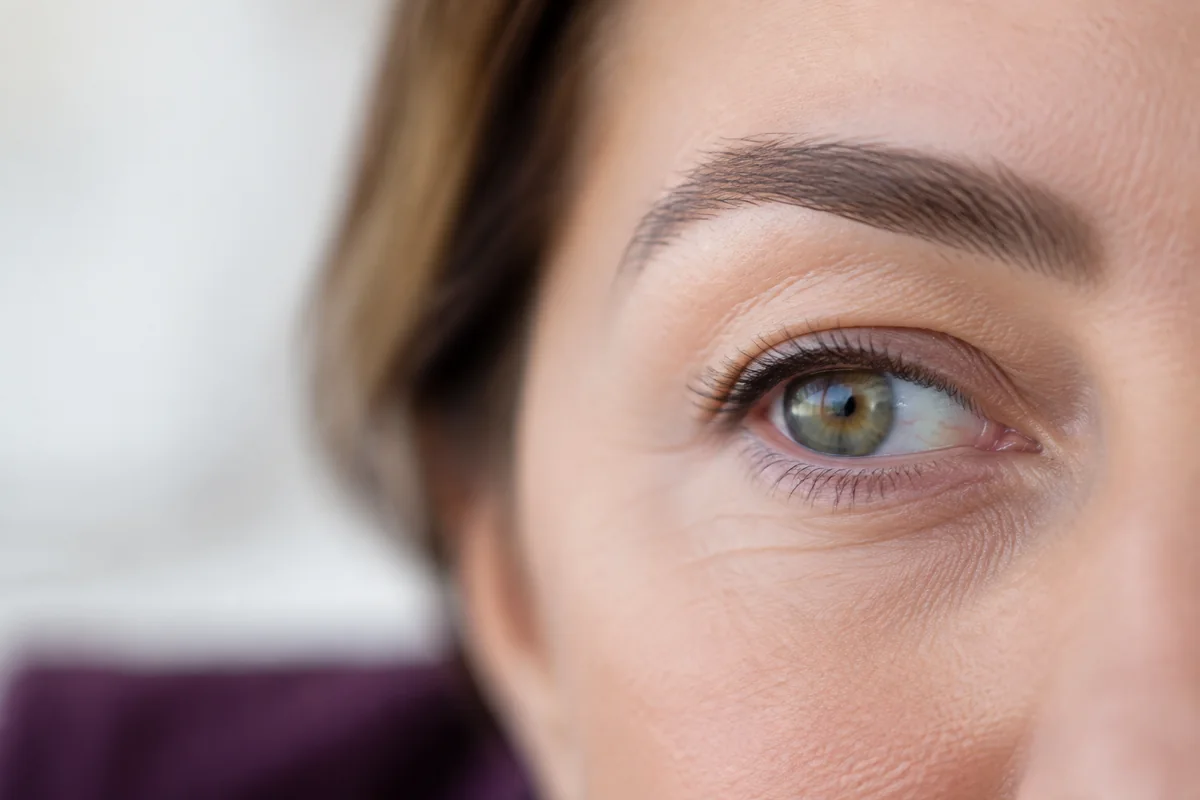
Why are my eyelids marked by the signs of time?
The eyelids are an area of the face where the skin is extremely thin. That is why the first signs of skin ageing appear there. Over time, the skin becomes dehydrated and loses volume. The fat between the lower eyelids and the eye socket gradually disappears, which leads to hollows under the eyes. As well as hollow dark circles, fatty bags may appear, creating a shadowy area that ages the eyes.
The upper eyelids are likewise affected by sagging skin: excess skin appears at the corners of the eyes. This is linked to the loss of fatty volume, and to the deepening of expression lines on the forehead, at the crow’s feet and between the eyebrows. A drop in the tail of the eyebrows can also be observed.
What is blepharoplasty, or eyelid surgery?
Blepharoplasty is a surgical procedure designed to rejuvenate the eyes by removing excess skin and restoring volume to the skin. It is one of the most common cosmetic surgery procedures, as it gives lasting results. Different blepharoplasty techniques are used, depending on the indications.
Addition blepharoplasty is one of the most frequently performed procedures. It combines an autologous fat transfer, using fat taken from the patient, to fill the hollows, with resection procedures. This makes it possible to sculpt the eyes precisely and is intended to ensure a natural result. Micro-lipofilling likewise restores eyelid volume through fat grafting.
Nano-lipofilling, for its part, injects stem cells extracted from the fat in order to stimulate eyelid regeneration and make dark circles disappear. Pinch blepharoplasty restores tension to the eyelid without removing muscle or skin. Finally, under-eye bags are removed with a laser scalpel, which minimises bleeding.
The after-effects of the operation vary with the technique used. The skin may nonetheless be slightly sensitive if fat has been removed.
Can I go out in the sun after a blepharoplasty?
With the exception of lipofilling, blepharoplasty leaves scars on the skin. Although they are very slight and inconspicuous, these scars need time to close completely. It is important to avoid anything that irritates or congests the skin, so as to encourage regeneration. Exposure to the sun and to UV rays is therefore contraindicated for one month.
Surgery also causes swelling and bruising. It is therefore advisable to wear sunglasses, apply sunscreen and wear a hat, in order to limit inflammation and prevent complications such as skin blemishes. While these recommendations apply to all surgery, they matter all the more for the eyelids, which are very fragile and highly exposed to light. You can return to your usual activities 4 to 5 days after the operation.
This page is for information only. It does not replace a consultation: every situation is assessed on examination.