
Hollow cheeks after weight loss: is lipofilling effective?
Before / after
Real cases from the practice, unretouched, framed on the treated area only. Each result is individual and does not predict yours.
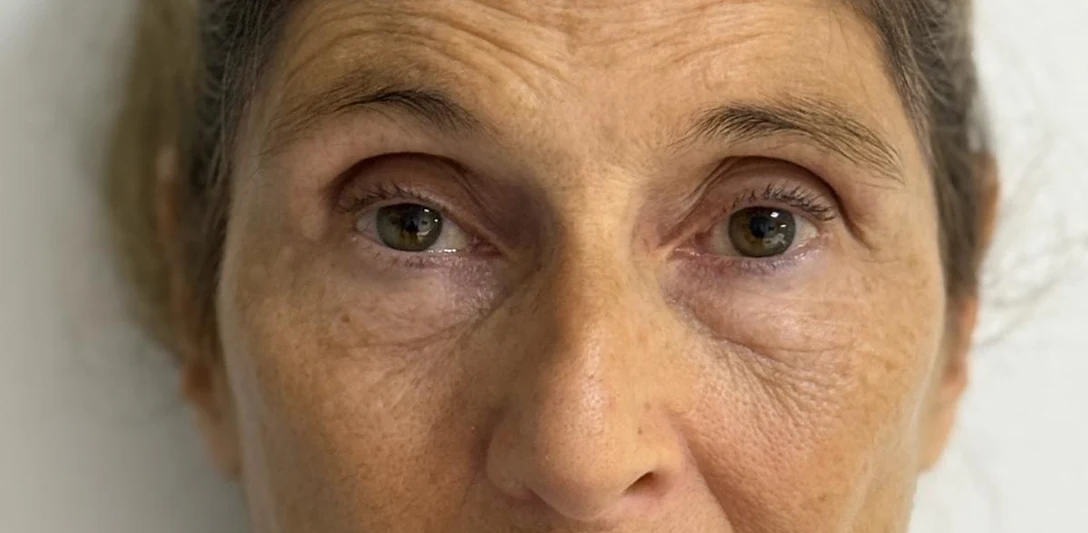
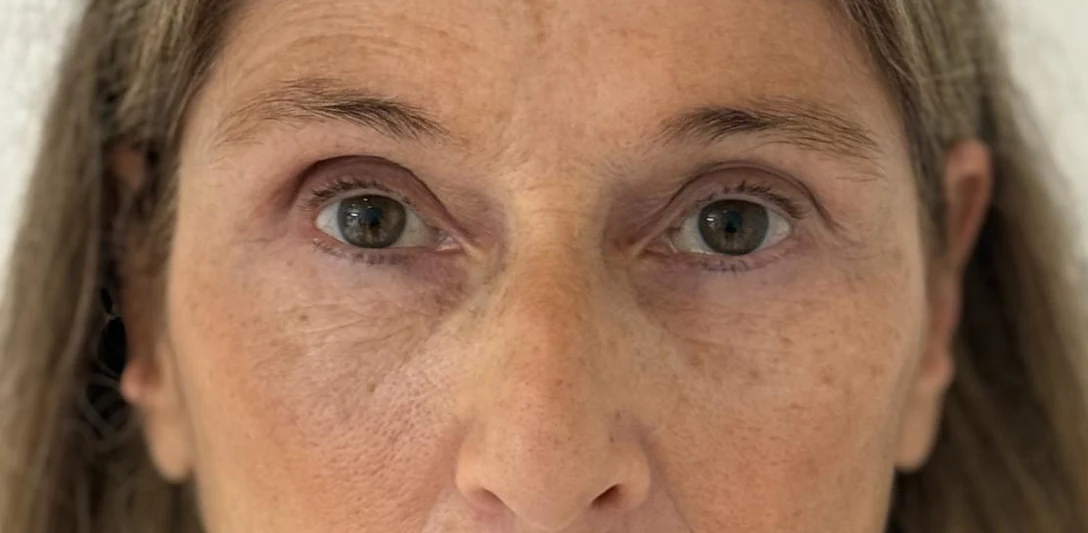
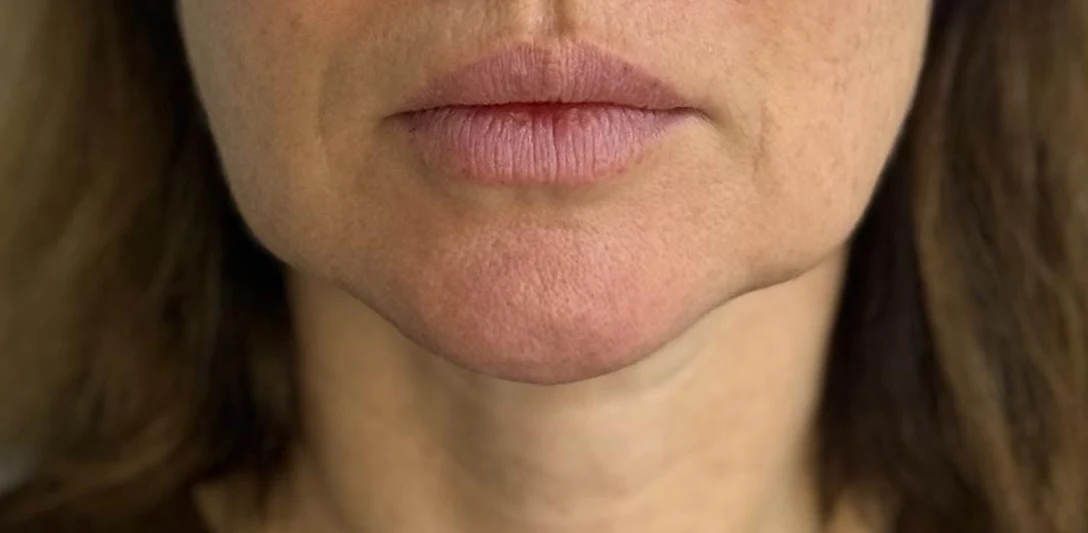
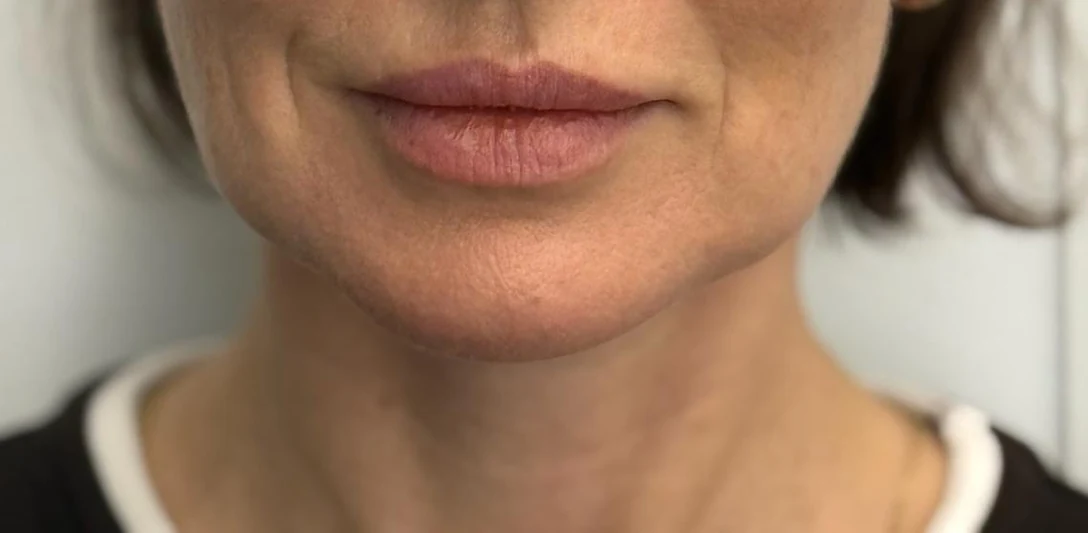
Photographs published with the patients’ written consent.
Written and reviewed by Dr Bernard Hayot, ophthalmologist, RPPS 10003926226.
Why do cheeks hollow out after weight loss?
Over time, natural ageing causes the cheeks to sag and fat to diminish. This phenomenon can also be observed after weight loss.
Weight loss, although often beneficial to health, can sometimes have unwanted consequences for the appearance of the face. As the kilos disappear, so does the fat in the face, particularly in the cheek area. This loss of fat volume gives the cheeks a hollow, sagging appearance, and facial harmony is altered.
Cheeks that hollow out after weight loss can be explained by a number of factors:
- Weight loss is accompanied by a loss of subcutaneous fat. The body burns fat reserves, including those under the skin.
- Fat loss is also observed in the fat compartments that give the face its structure. When those under the cheeks are affected, hollows appear.
- Weight loss can also reduce muscle volume in the face. The facial structure is then less well supported, which results in sagging tissue.
- With age, the body produces less and less collagen and elastin, essential for maintaining skin firmness and elasticity. As a result, the skin becomes looser.
- Weight loss can lead to bone changes that can accentuate the appearance of sunken cheeks.
- Finally, genetic factors also need to be taken into account. Not everyone reacts in the same way to weight loss.
What is volume lipofilling to restore facial volume?
Volumising lipofilling involves transferring fat from one area of the face or body to another in order to restore lost volume. This anti-ageing treatment durably fills the hollow areas of the face, such as sunken cheeks.
The result is discreet and particularly natural. It is also possible to perform a specific lipofilling technique called nano-lipofilling. This involves extracting stem cells and growth factors from fat taken from the patient. Volumes are restored, while the skin gains in texture, radiance and quality.
Lipofilling is performed on an outpatient basis and generally takes only about an hour. The procedure is valued for its safety, as the fat comes from the patient’s own body. This reduces the risk of allergic reaction or rejection, and also allows the result to be shaped and tailored for a natural look.
Is lipofilling recommended for filling hollow cheeks?
Volumising lipofilling is an effective option for restoring all facial volumes, including hollow cheeks. It may not, however, be the best option for everyone: you need to be in good health and to have a sufficient quantity of fat to harvest.
To fill hollow cheeks, lipofilling follows these steps:
- The oculoplastic surgeon performs liposuction in the donor area (around the abdomen, the thighs or the hips). The harvested fat is processed and purified to remove unwanted impurities and fluids.
- The treated fat is injected into the cheeks, which have lost volume. The natural contours of the face are restored.
- The oculoplastic surgeon precisely sculpts this injected fat with the aim of achieving harmonious results.
It is important to consult a qualified oculoplastic surgeon to determine whether lipofilling is the best option for your needs and expectations.
This page is for information. It does not replace a consultation: every situation is judged on examination.