
Is blepharoplasty reversible?
Before / after
Real cases from the practice, unretouched, framed on the treated area only. Each result is individual and does not predict yours.
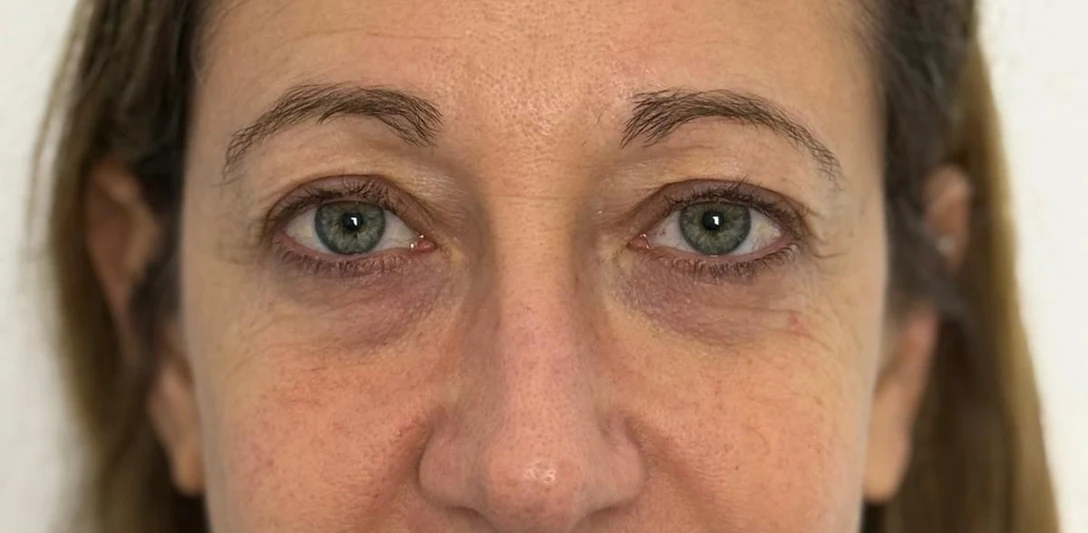
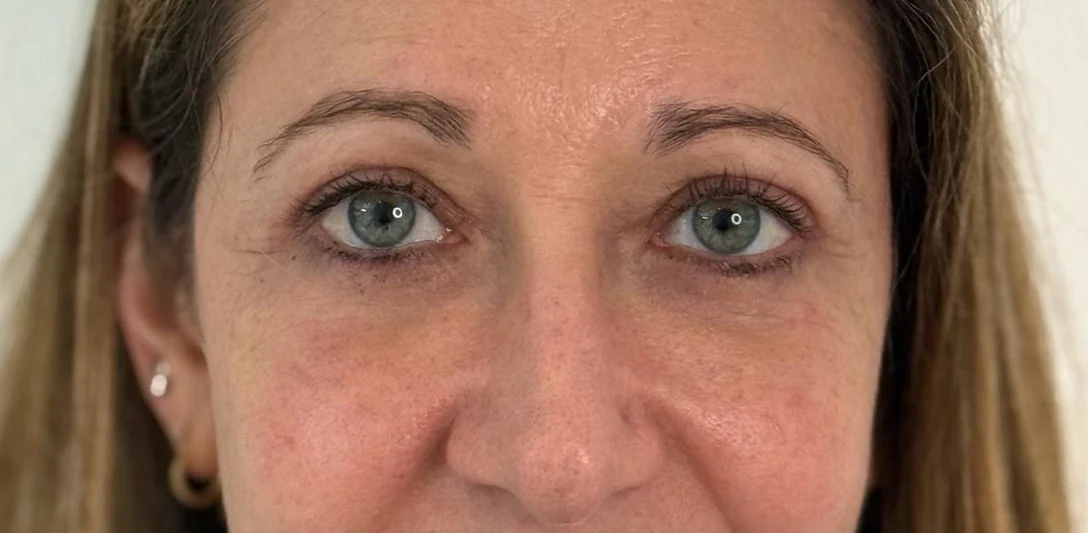
Photographs published with the patients’ written consent.
Written and reviewed by Dr Bernard Hayot, ophthalmologist, RPPS 10003926226.
What is a blepharoplasty in cosmetic surgery?
Blepharoplasty is facial surgery, also known as eyelid surgery or eye surgery. It involves correcting excess skin or fat on the upper or lower eyelids.
The eyes are the first area of the face to be affected by skin ageing. Blepharoplasty treats all the aesthetic problems associated with this area. In particular, it can correct:
- drooping eyelids
- bags under the eyes
- hollow and pigmented dark circles
- a sagging or wrinkled lower eyelid
- drooping eyebrow tails
- crow’s feet and glabellar lines
Depending on the indication to be treated, there are several types of blepharoplasty.
Addition blepharoplasty
This allows all four eyelids, upper and lower, to be treated at the same time. The procedure is perfectly suited to the ageing of the eyelids and effectively treats sagging eyelids. It involves injecting fat into the volumes that have been lost as the fat melts away.
Lipofilling
Also known as micro-lipofilling or micro-lipostructure, lipofilling rejuvenates the upper eyelid by correcting a slight excess of skin on a hollow eye. The technique fills the areas of the face that lack volume by injecting fat taken from the patient’s own body.
Nano-lipofilling
Also known as nano-lipostructure, nano-lipofilling harvests fat from the patient and extracts stem cells and growth factors from it. This extract promotes the vascularisation of the cells subsequently grafted and stimulates collagen production. The procedure is particularly indicated for masking dark circles.
Removal of under-eye bags
This procedure is performed transconjunctivally: the incision is made inside the lower eyelid. The bags are then removed. The scars are not visible.
Pinch blepharoplasty
This lower eyelid surgery corrects the creased, wrinkled appearance of the lower eyelids. The excess skin is removed without detaching the subcutaneous tissues or affecting the surrounding nerves and muscles. The scar is virtually concealed, and its visibility depends on healing.
Who needs eyelid surgery?
Blepharoplasty is one of the most popular rejuvenation procedures. It is generally performed around the age of 35 to 40. The decision to undergo a blepharoplasty is, however, a personal one. Anyone who feels self-conscious about the appearance of their eyes can benefit from eyelid surgery. In every case, the procedure helps to reduce the signs of ageing and to restore a more youthful gaze.
Is blepharoplasty reversible?
Blepharoplasty is a non-reversible, one-off operation. Only lipostructure is not permanent: it has to be repeated after about ten years. Other blepharoplasty procedures should never be repeated. That is why it is important to consult an experienced surgeon who has mastered all the techniques in the field and who keeps his or her knowledge up to date.
Dr Hayot responds to his patients’ needs by taking into account their morphology, their health, their wishes and their medical history. He trains continuously and adopts the most effective surgical methods for correcting eyelid anomalies. He also favours autologous injection methods, to ensure a natural result.
This page is for information. It does not replace a consultation: every situation is judged on examination.