
Lipofilling of dark circles: the right steps to take before the procedure
Before / after
Real cases from the practice, unretouched, framed on the treated area only. Each result is individual and does not predict yours.
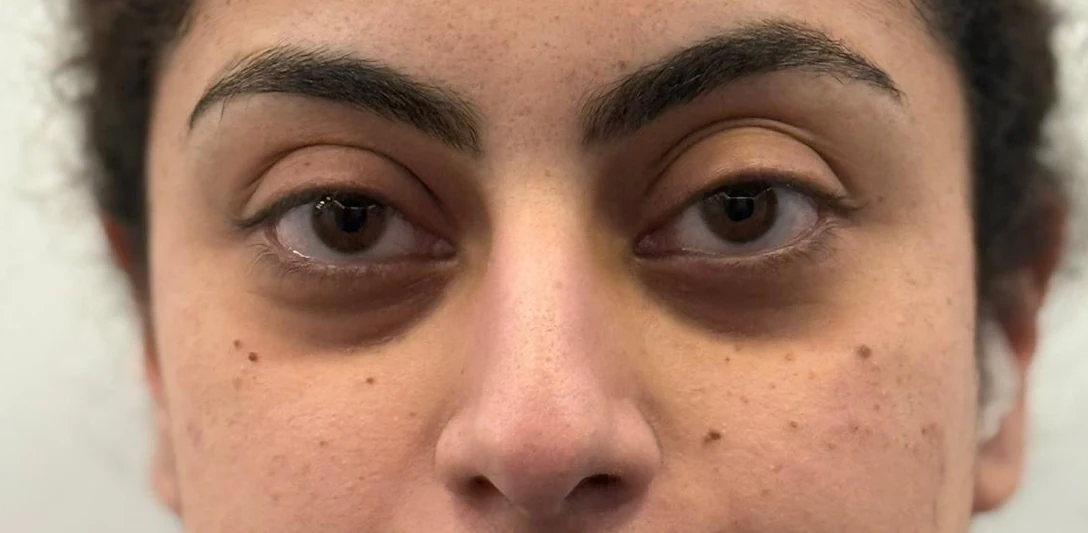
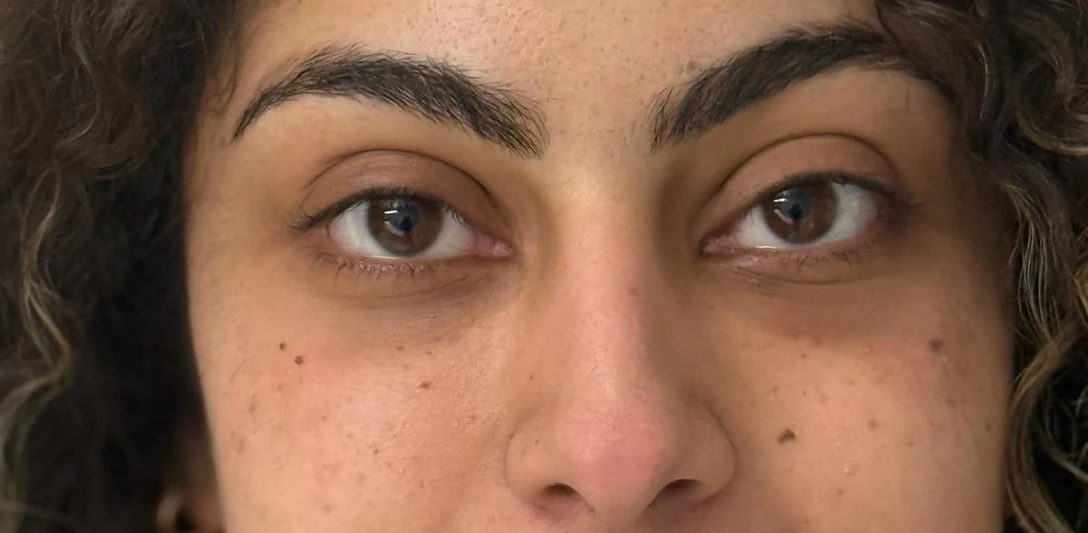
Photographs published with the patients’ written consent.
Written and reviewed by Dr Bernard Hayot, ophthalmologist, RPPS 10003926226.
What does lipofilling of the under-eye circles involve?
Under-eye lipofilling corrects hollow under-eye circles by transferring the patient’s own fat. It is an aesthetic surgical procedure designed to reduce the appearance of dark circles under the eyes using the patient’s own body fat. Also known as autologous fat grafting or liposculpture, the technique involves taking fat from parts of the body such as the abdomen, thighs or hips, then reinjecting it under the eyes to fill the hollows. Hollow under-eye circles are caused by the loss of fat between the bone and the lower eyelid. They are very visible because the skin around the eye is thin and fragile.
To correct this with under-eye lipofilling, the procedure is as follows:
- Fat is taken from the patient by liposuction, usually from the abdomen or the inner knees.
- The harvested fat is cleaned and defibrosed, then reinjected into the hollow under-eye circle with fine cannulas. The fat fills the hollow and makes it disappear.
- The skin of the lower eyelids is then tightened.
Lipofilling of the under-eye circles is a common and particularly effective procedure. The results, which are final after three months, are striking: the eyes look younger and brighter.
Who can benefit from lipofilling of the under-eye circles?
Anyone with hollow under-eye circles can benefit from lipofilling. More specifically, the procedure can be considered by people who meet the following criteria:
- A hollow or loss of volume under the eyes
- Good general health
- Realistic expectations: pigmentation problems cannot be corrected by lipofilling of the under-eye circles.
The decision to have under-eye lipofilling is a personal one. Before deciding, however, it is advisable to consult a qualified and experienced oculoplastic surgeon. Only a thorough consultation with an oculoplastic surgeon will tell you whether this procedure is right for your particular situation.
What should I do before under-eye lipofilling?
To optimise the results of the procedure, Dr Hayot makes the following recommendations:
- Before under-eye lipofilling, one or two surgical consultations are needed, followed by a 15-day cooling-off period. These appointments also confirm that the procedure is not contraindicated.
- Smoking must be stopped for at least one month before the operation.
- Aspirin and anti-inflammatory drugs must also be stopped for 10 days.
- Do not take anticoagulants.
- A consultation with the anaesthetist is required. You can book it at least 48 hours before the operation. A blood test is also recommended.
- You must fast for 8 hours before the operation.
It is important to follow all these instructions so that you are properly prepared for the procedure. Dr Hayot, an expert in eyelid and oculoplastic surgery for more than 10 years, is available to answer your questions and listen to your concerns. He will examine you at an initial consultation and draw up a tailored treatment plan with you. He will then remind you of the various precautions to follow.
This page is for information. It does not replace a consultation: every situation is judged on examination.