
Lipofilling
Before / after
Real cases from the practice, unretouched, framed on the treated area only. Each result is individual and does not predict yours.
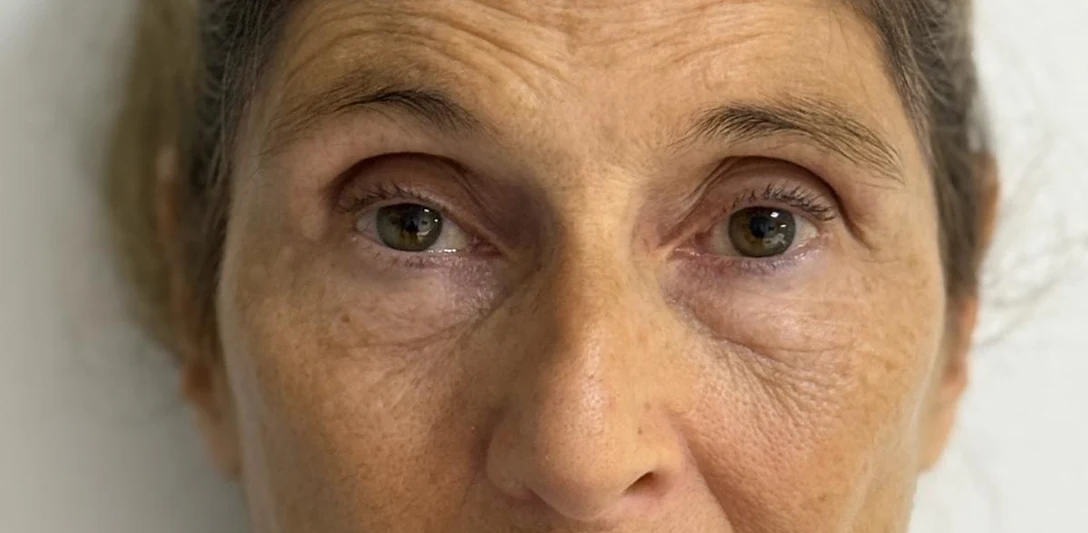
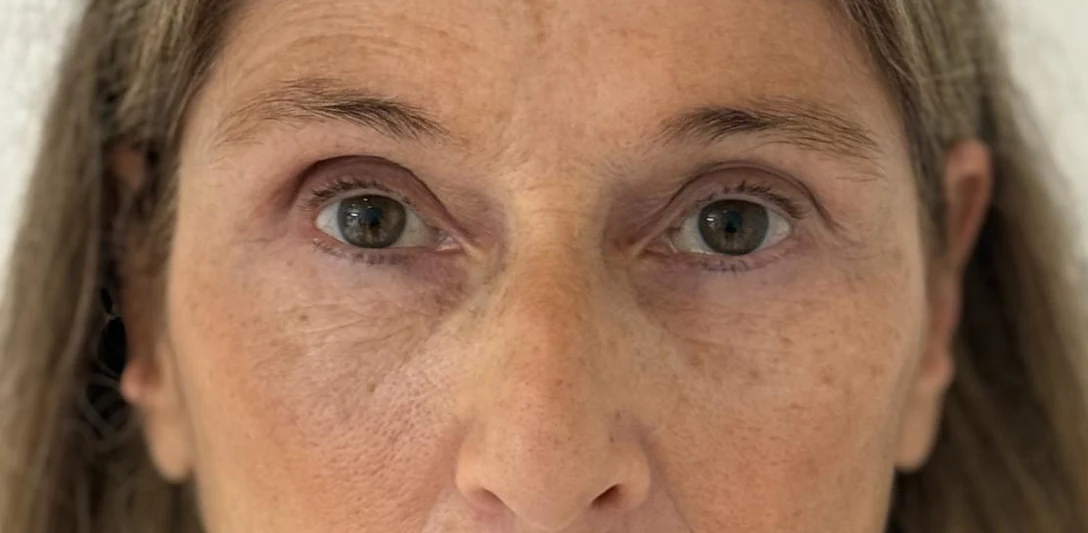
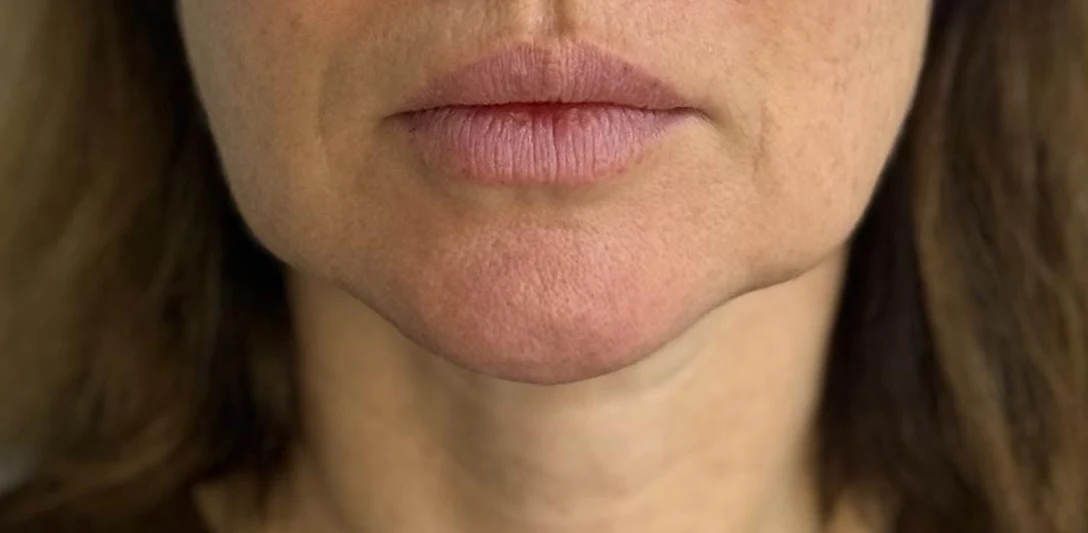
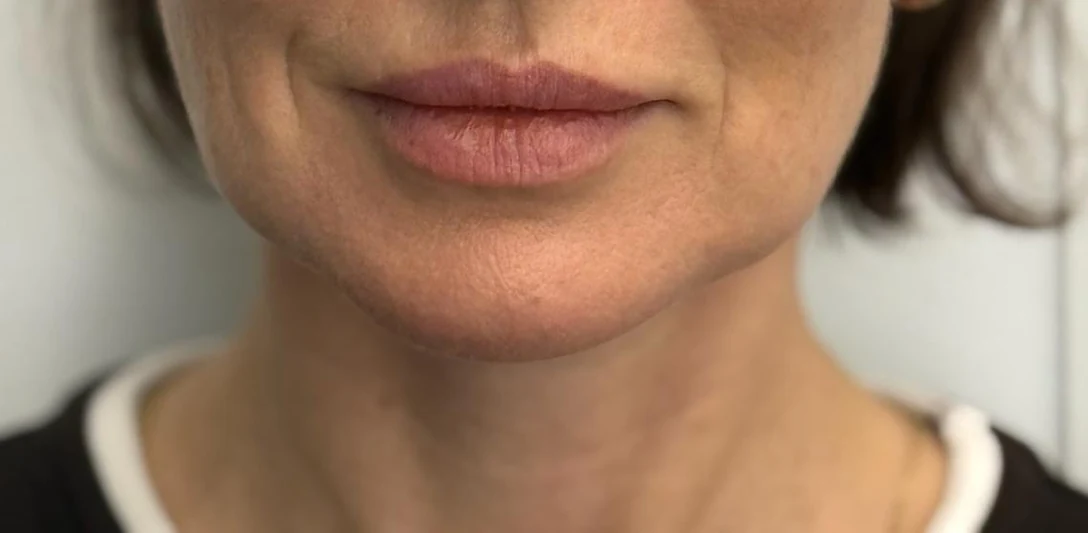
Photographs published with the patients’ written consent.
Written and reviewed by Dr Bernard Hayot, ophthalmologist, RPPS 10003926226.
Dr Hayot’s column
After several congresses around the world and years of experience in aesthetic medicine and surgery, Dr Bernard Hayot shares his impressions of volumising hyaluronic acid: a critical analysis and a fresh look at injections of this filling product.
Hyaluronic acid: a worrying observation
“Over my years of practising aesthetic medicine, I have come to realise thathyaluronic acid injected into the under-eye circles does fill the hollows, but that, contrary to what aesthetic physicians believe, the product is not resorbed naturally.
I see patients again after 4, 6 or 8 years who still have the hyaluronic acid I injected years earlier. As soon as they come back for a consultation, I can see that the product shows through the skin and has swollen the face rather than being reabsorbed.
It was from these observations, which kept recurring, that I began to think that the biodegradability claimed by the major laboratories for the hyaluronic acid they market had not been verified. I came to understand that the molecule is in fact not completely biodegradable when it is injected deep into an area of the face that moves little, such as the hollow of the under-eye circle.
My farewell to hyaluronic acid for the under-eye circles
“When patients come to my practice to rejuvenate their eyes, I see that their under-eye circles, treated with hyaluronic acid injections, look puffy, form bags under the eyes or give a bluish appearance. The product has to be removed.
For several years now I have been injecting hyaluronidase into under-eye circles that have been over-injected, injected incorrectly, or where the hyaluronic acid has not been resorbed as expected. Hyaluronidase is a powerful antidote that removes all the acid from an area of the face. It offers my patients the chance to turn back the clock, rather like a corrective “eraser” which, while it does not rejuvenate them, does undo the pitfalls of failed aesthetic medicine.
Once I have given the hyaluronidase injections, it is not unusual for the eyes to look even more hollow than before the hyaluronic acid injections. This appearance is often psychologically difficult for patients, who immediately feel aged, wrinkled and tired. It is therefore urgent to overcome that feeling as quickly as possible: fat injections are the best answer to their problem.”
Hyaluronic acid to create volume: caution is advised
“While it is true that I have found hyaluronic acid not to be resorbed in the under-eye circles, I have found the same in other areas of the face, such as the cheekbones.
When patients return to my practice 5 years after volumising injections in the cheekbones, I find that the product is still there and that the volumising effect has, in most cases, not diminished, or only slightly.
I sometimes tend to think that the water-attracting property of hyaluronic acid keeps acting like a sponge over all those years, and that the volumising effect increases many times over. So much so that my patients’ cheekbones look fuller than they did just after the injections.
I then avoid reinjecting my patients, so as not to overdose them.
Ultimately, volumising hyaluronic acid contributes to inflated faces and does not give a natural result, unlike the very discreet result obtained with fat injections.”
Keeping hyaluronic acid to treat expression lines
I have always treated my patients’ expression lines with Botox or hyaluronic acid injections.With the right technique, the right method and the right product, a highly satisfactory result can be achieved, especially in the nasolabial folds and the perioral wrinkles.
Hyaluronic acid fills the break in the skin for a few years, but the product resorbs fairly quickly because certain areas of the face move a great deal and because facial expressions are repeated constantly.
Smiling, chewing, talking, eating, drinking and smoking all create and deepen wrinkles. At the same time, all these movements gradually eliminate the hyaluronic acid that has been injected. In my view, it is safe to inject this product as a powerful anti-wrinkle treatment in these areas of the face, and unpleasant surprises are rare.
Keeping up with the times and reappraising your work as an oculoplastic surgeon every day
“Why have I turned away from hyaluronic acid for the under-eye circles in favour of fat injections?
A good oculoplastic surgeon must constantly ask the right questions in order to move the speciality forward and find the right surgical techniques, products, movements and doses. Understanding how the face ages is not enough to rejuvenate it naturally. You also have to question surgical methods, the products marketed by laboratories and their formulations, and develop your technique by taking the necessary step back.
Every day, by observing my patients more closely and discussing their impressions and feelings with them, I refine my technique and push my limits further, to find methods that will give them the most natural result possible.
That is why I have turned to 3 new fat injection techniques, which have gradually led me away from hyaluronic acid:
- Anti-wrinkle fat injections
- Volumising lipofilling
- Nano-lipofilling: the new mesotherapy
This page is for information. It does not replace a consultation: every situation is judged on examination.