
My Botox story
Written and reviewed by Dr Bernard Hayot, ophthalmologist, RPPS 10003926226.
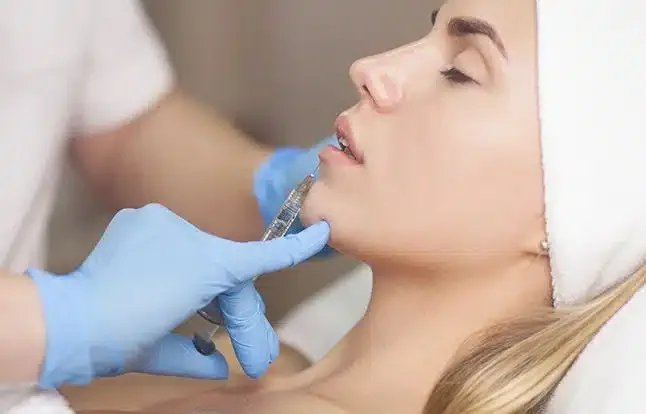
The first breakthrough came from Dr Alastair Carruthers, a Canadian ophthalmologist by training, who discovered the action of Botox® and its paralysing effect on muscle. His wife, a dermatologist, then tried the product as part of her treatments to improve skin quality. She noticed that the product, injected into the eyelid of a patient with blepharospasm, had made his crow’s feet disappear. Both concluded that botulinum toxin injections significantly reduced wrinkles.
Hoping to take my own research further into the qualities of this product, which was little known in the profession at the time, I set off for Canada to learn from the few pioneers then working with it.
A few months later, back in France, I had gathered enough knowledge about Botox® to start using it in aesthetic medicine, and I realised that I wanted to make it my profession and my speciality.
I soon became a training physician for my colleagues and began working as a Botox® reference physician for Allergan® Laboratories. Over time, this major laboratory, which initially specialised in the treatment of eye conditions, expanded into several medical fields, including dermatology and aesthetic medicine.
Starting out with Botox® injections in aesthetic medicine is not easy. The product is often incorrectly dosed or injected, resulting in frozen foreheads. The first Botox® supplied by the laboratories had the advantage of making wrinkles disappear completely, but it made faces look inexpressive: the eyebrows were raised too much, and patients looked durably astonished.
As the months and years went by, I learned to handle the product and to inject it more precisely. I realised that Botox® did not only neutralise muscle overactivity. By treating the cause of the wrinkle, it also made the break in the skin disappear. As I treated more and more patients, I saw that the skin retained no memory of that break, and that the wrinkle disappeared completely. The product struck me as the innovative anti-ageing treatment.
Gone were the brow lifts, and the scalped, taut, bruised foreheads. Gone were the heavy cosmetic operations that changed the face and betrayed a recent procedure. Botox® quickly became the go-to solution for rejuvenation that does not show: less risky, safer, lighter and not permanent, in keeping with what people ask for today.
Today, doses and concentrations have been refined. I inject superficially, so as never to make a face static, and I achieve the effect of a genuine facelift without surgery.
After 25 years of experience, we finally have enough perspective to say that botulinum toxin has no known side effects or allergies. These years of use reflect its established track record, which is why it has become so widely used.
Some complications may nonetheless occur:
- Exceptional complication: worsening of the malar bag.
Relaxing the orbicularis muscle at the crow’s feet aggravates lymphatic stasis and increases the malar bag. - Minor complication:
- Drooping of the eyebrow: if the practitioner fails to identify the wrinkle to be treated and injects a compensatory wrinkle instead of an expression line, the eyebrow drops and closes the eye.
- Mephisto sign: the head of the eyebrow is lowered and its tail raised too high. It is easily corrected with a touch-up a week later. My expertise is intended to ensure a natural result for my patients in every case.
Dr Bernard Hayot
This page is for information. It does not replace a consultation: every situation is judged on examination.