
What are the advantages of laser eye surgery to remove bags under the eyes?
Before / after
Real cases from the practice, unretouched, framed on the treated area only. Each result is individual and does not predict yours.
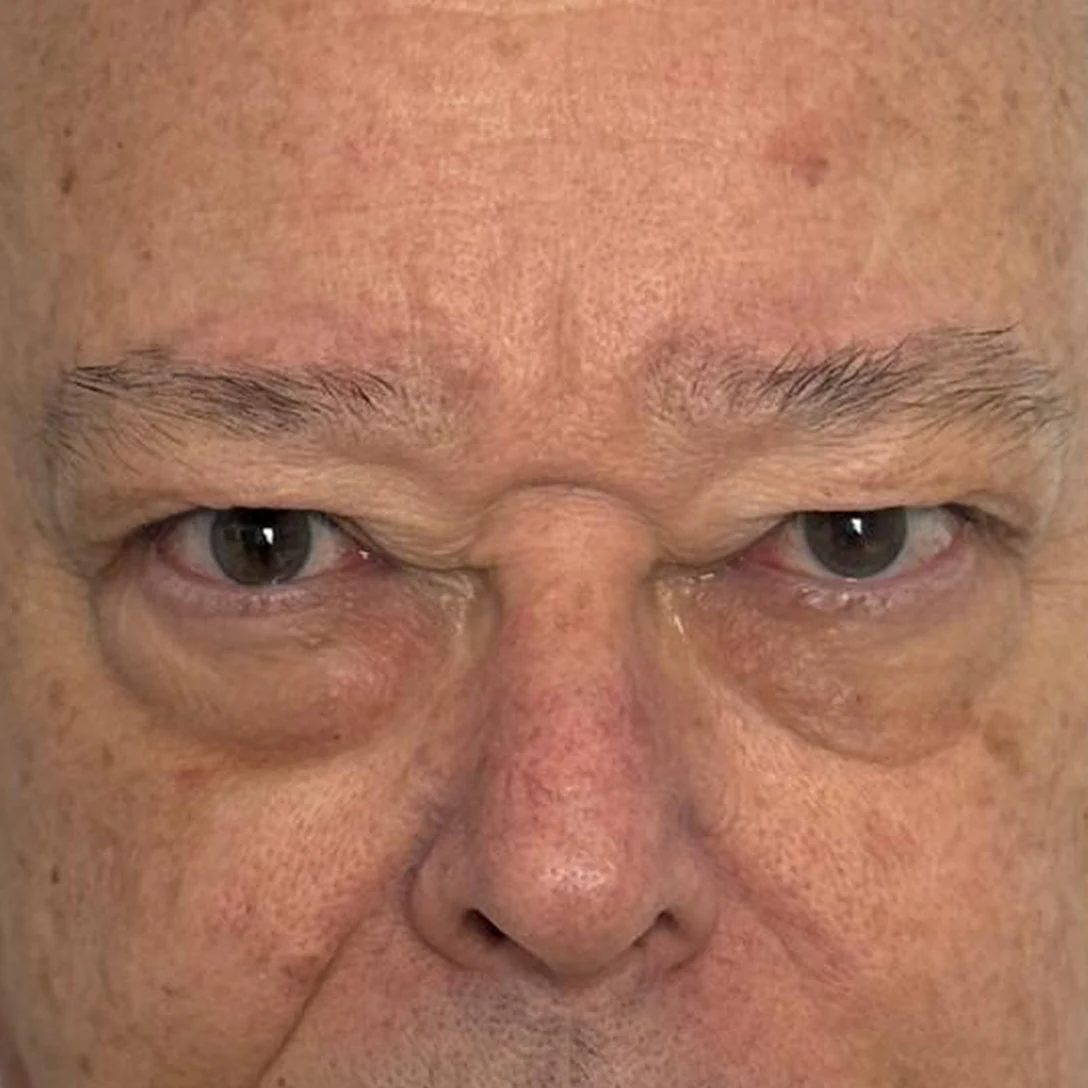
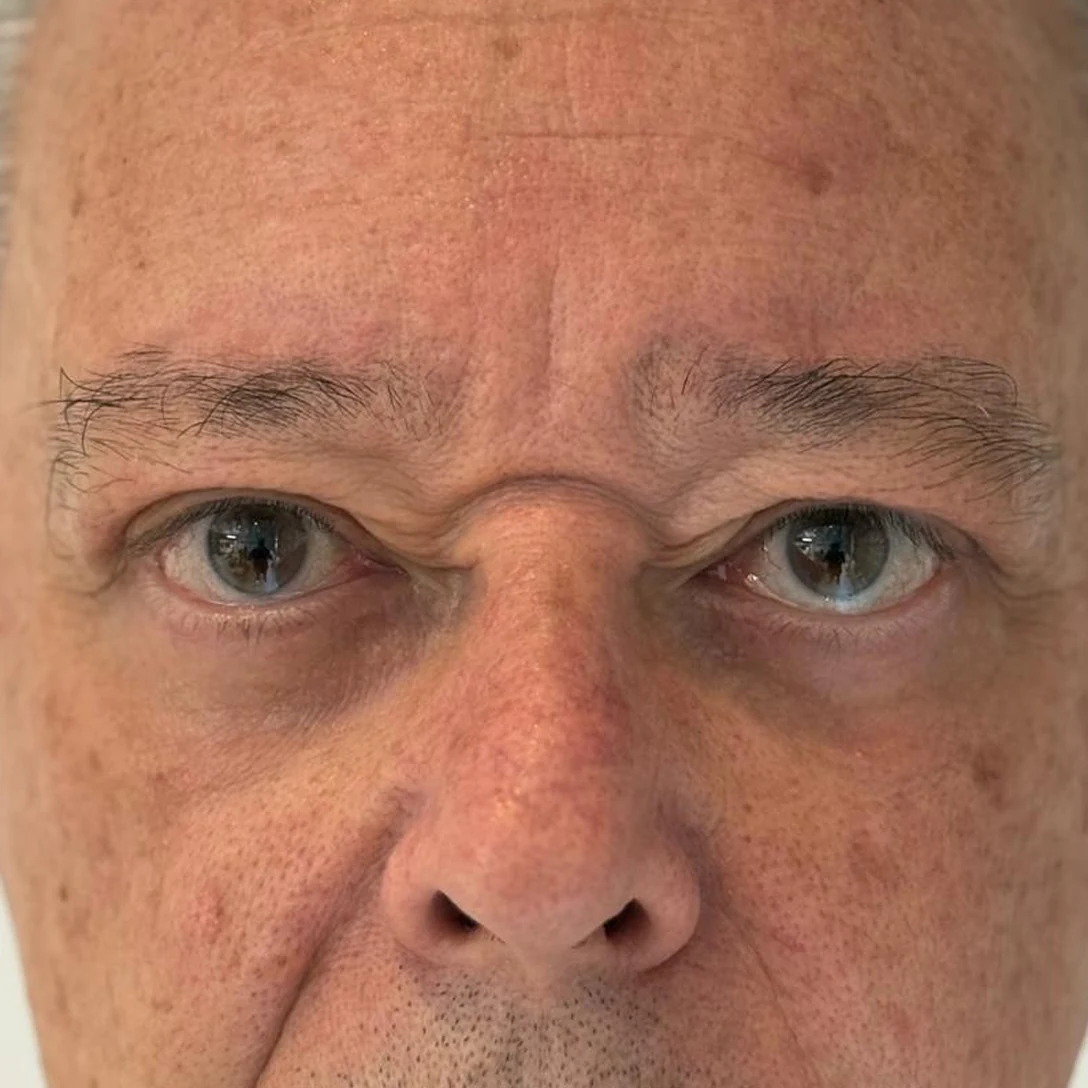
Photographs published with the patients’ written consent.
Written and reviewed by Dr Bernard Hayot, ophthalmologist, RPPS 10003926226.
What are under-eye bags?
Under-eye bags are a swelling of the lower eyelid. There are two types: the malar bag, caused by lymphatic oedema, and the fat bag. The malar bag is very often due to lymph, whereas the fat bag is an externalisation of intra-orbital fat that slides under the eyelid muscle. Whatever the type of bag, conventional eyelid & oculoplastic surgery or laser treatment are the preferred methods for removing them permanently.
Causes of under-eye puffiness
There are many causes of under-eye puffiness.
First, they may result from the movement of intra-orbital fat and from tissue engorgement (water retention or fat deposition), leading to poor blood circulation and lymphatic disruption.
Intra-orbital fat initially serves to protect the eye from the bone of the orbit. With age, or with certain anatomical predispositions, this fat, which surrounds the eye, becomes externalised under the orbicularis muscles. Fat is hydrophilic, meaning that it attracts water. Sleeping with the head “down”, for example, encourages the mechanical variation of the fat bag, depending on the patient’s water retention. This is why, on waking in the morning, the fat bags are more pronounced and give the eyes that “puffy” look. In this case they are transient.
Age is another well-known cause of under-eye bags. Ageing of the tissues and of the septum is responsible for the externalisation of the fat bags. As a result, under-eye bags become more permanent: the skin loses its suppleness and firmness, and the fat initially located in the eyelid slides into the lower eyelid as the skin slackens. At the same time, lymphatic circulation slows down, which encourages puffiness.
Puffiness under the eyes can also result from poor lifestyle habits, including:
- Periods of stress or sleep disorders, which in the long term lead to the release of cortisol, which promotes water retention;
- The consumption of alcohol or tobacco, which disrupts the proper circulation of fluids;
- An unbalanced diet, in particular one that is too fatty (an accumulation of fatty deposits encourages puffiness) or too salty (increased water retention).
Finally, bags under the eyes can be hereditary: this is also the case for all types of dark circles.
Under-eye bag surgery: laser surgery
Laser blepharoplasty is a particularly effective way of rejuvenating the eyes and removing under-eye bags. With this method, the bags are removed with a laser scalpel via the transconjunctival route (the red area on the inside of the eyelid). The bag disappears permanently and never returns.
Laser blepharoplasty leaves no skin scars. The CO2 laser does not alter the look of the eyes, and patients regain a harmonious, rested eye contour. It also makes the procedure bleeding-free, with a precision and a finesse that avoid removing tissue unnecessarily.
What are the advantages of eliminating under-eye bags with laser treatment?
There are several advantages tousing laser treatment for puffiness. First of all, the procedure requires no sutures, so there is no scarring of the skin. This under-eye bag procedure also causes neither oedema nor haematoma. There is no bleeding, laser surgery is far more precise, and the remaining fat is clearly visible, so there is no need to hollow out the eye.
The result is lasting: the puffiness never returns. The look of the eyes is unchanged, and there is a very limited risk of altering their expression.
For the best aesthetic results, it is best to consult an oculoplastic surgeon who specialises in oculoplastic surgery, and in particular in CO2 laser treatment.
What’s the difference between blepharoplasty and laser blepharoplasty?
A conventional blepharoplasty, that is a surgical procedure, involves removing excess skin from drooping eyelids, upper or lower, by means of an incision. Like all surgery, it is not without risk and may leave scars. It also requires a few days, from one week to ten days, to recover. Laser blepharoplasty, on the other hand, requires no surgery, no incision and no time away from social life. Nor does it cause any skin damage, apart from small scabs that fall off within a week and can easily be camouflaged with make-up.
Laser blepharoplasty is ideal for treating fat bags under the eyes and for lifting the eyelids without surgery. If, on the other hand, malar bags need to be corrected, or if you need to intervene on the eyelids or eye contour, other eyelid & oculoplastic surgery techniques are recommended.
During your initial consultation, your oculoplastic surgeon will guide you towards the technique best suited to your individual case: laser treatment of the bags, addition blepharoplasty, and so on.
Protocols, dosages and fees are never published here: they are determined in consultation, after examination, and set out in writing in the estimate.
This page is for information. It does not replace a consultation: every situation is judged on examination.