
Hollow, dark circles: what are the solutions?
Before / after
Real cases from the practice, unretouched, framed on the treated area only. Each result is individual and does not predict yours.
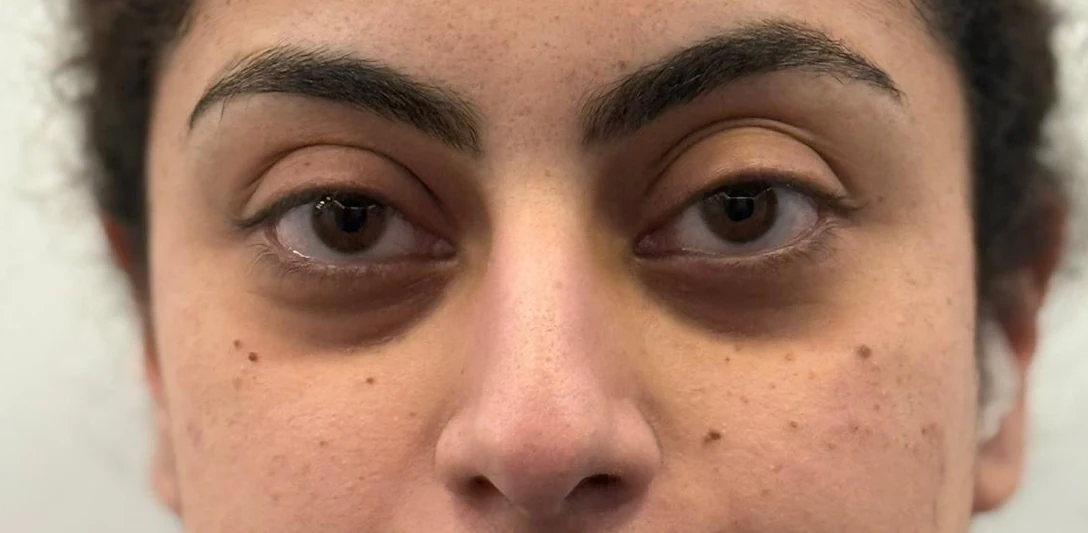
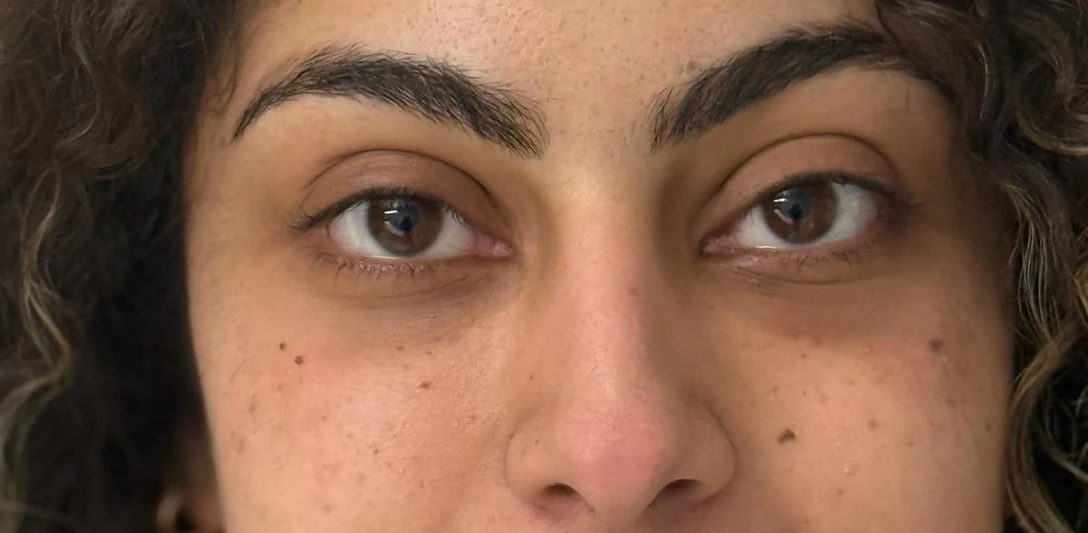
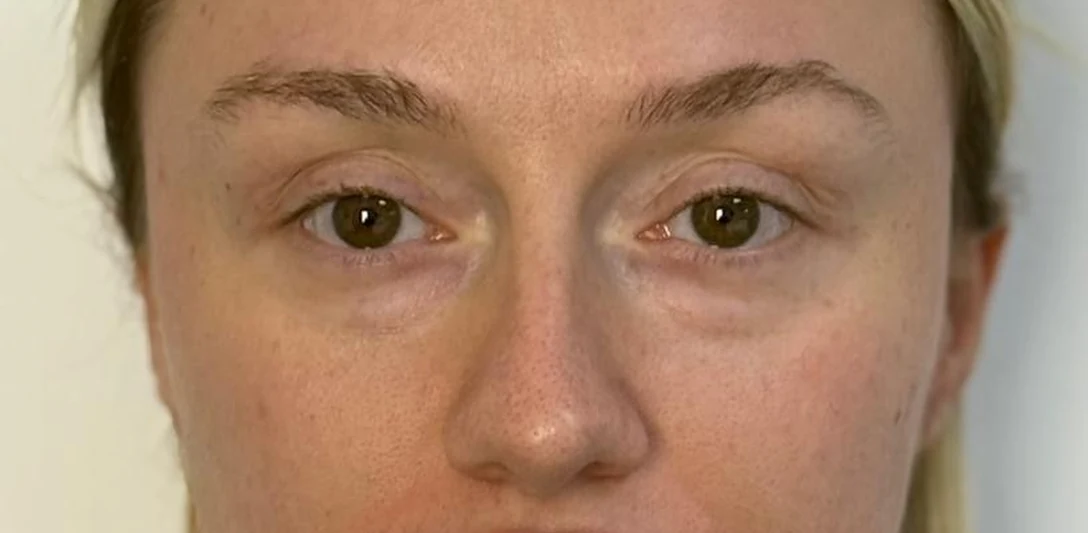
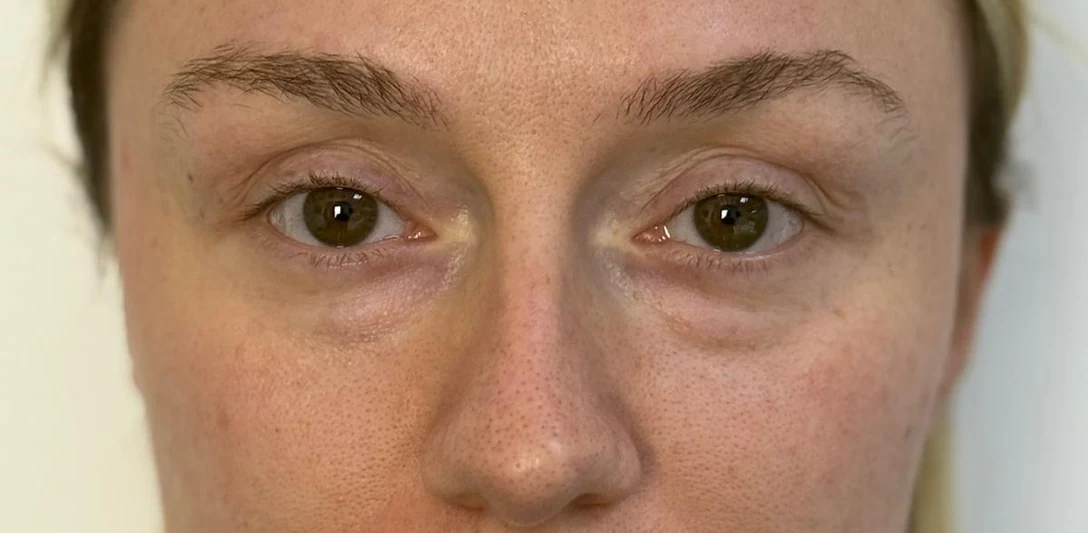
Photographs published with the patients’ written consent.
Written and reviewed by Dr Bernard Hayot, ophthalmologist, RPPS 10003926226.
Why do I get dark circles?
The skin in the eye area is very fragile, being up to 4 times thinner than on the rest of the body. It is therefore more sensitive to the signs of skin ageing and sagging. Dark circles usually form gradually. They can appear at any age and may be favoured by a number of factors, such as heredity, severe fatigue or poor lifestyle habits.
There are several types of dark circles:
- Hollow circles, characterized by the appearance of a furrow in the lower eyelid area;
- coloured (and dark) circles, characterised not only by a furrow on the lower eyelid, but also by a brown, violet or blue discolouration;
- “bag” dark circles, characterised by the formation of a bulging bag beneath the dark circle, which makes it even more visible.
What are hollow circles?
Hollow circles form a furrow under the eye, in the area between the root of the nose and the cheekbones. They result from fat melting away, which reveals the orbital rims and the bony structures of the lower eyelid. This melting of fat occurs as the skin ages. In the eyelids, it happens earlier, because the skin around the eyes is fragile and the area is highly mobile during facial expressions such as smiling or blinking.
What are dark circles?
Dark circles correspond to a marked colouring, generally bluish, purplish, brown or even red. It makes the eyes look tired and less youthful. The colouring is due to the blood vessels showing through the skin. Since the skin in this area of the face is extremely thin, the colour of the vessels shows through.
Dark brown or black circles often correspond to localised skin hyperpigmentation found in certain ethnic origins, although the transparency of the skin also plays a major role in their appearance.
Microlipostructure to fill dark circles
The most suitable cosmetic surgery technique for making hollow circles disappear is microlipostructure filling of hollow circles. Also known as microlipofilling, this solution involves filling the hollow crease with autologous fat, harvested from the patient’s own fat reserves, such as the abdomen or the inner knees. The procedure has several stages: liposuction of the fat in the donor area, processing of the fat and reinjection into the dark circle.
Lipostructure of the cheekbones, the temples or the upper eyelids is often combined with this treatment. The procedure takes place in the operating room, and the result is natural and long-lasting.
Nanolipofilling to treat dark circles
Nano lipofilling, or nanofat-grafting, is a procedure based on the principle of lipofilling. It treats dark circles by injecting stem cells and growth factors isolated from autologous fat. The fat is removed by liposuction, then rinsed, cleaned and defibrosed. The compound obtained through several sieves is reinjected into the area to be treated.
Gradually, the dermis thickens and forms a layer between the skin and the underlying blood vessels. The transparency effect becomes less visible and the coloured circles are greatly reduced. This is the only cosmetic surgery solution capable of delivering satisfactory results in the treatment of dark circles.
The procedure can be completed by microlipofilling if a hollow circle is also present.
This page is for information. It does not replace a consultation: every situation is judged on examination.