
Hollow and dark circles: what treatments are available?
Before / after
Real cases from the practice, unretouched, framed on the treated area only. Each result is individual and does not predict yours.
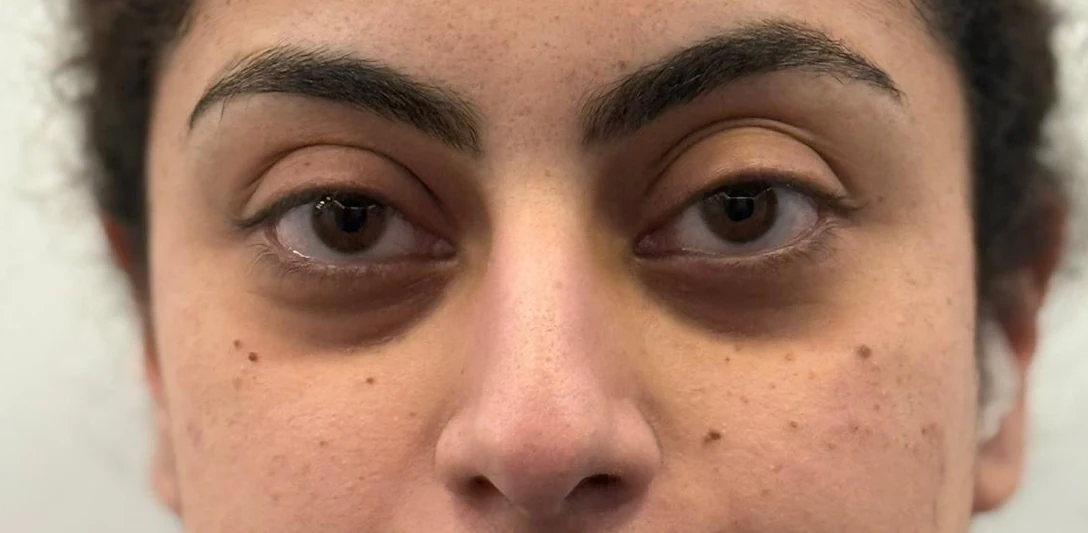
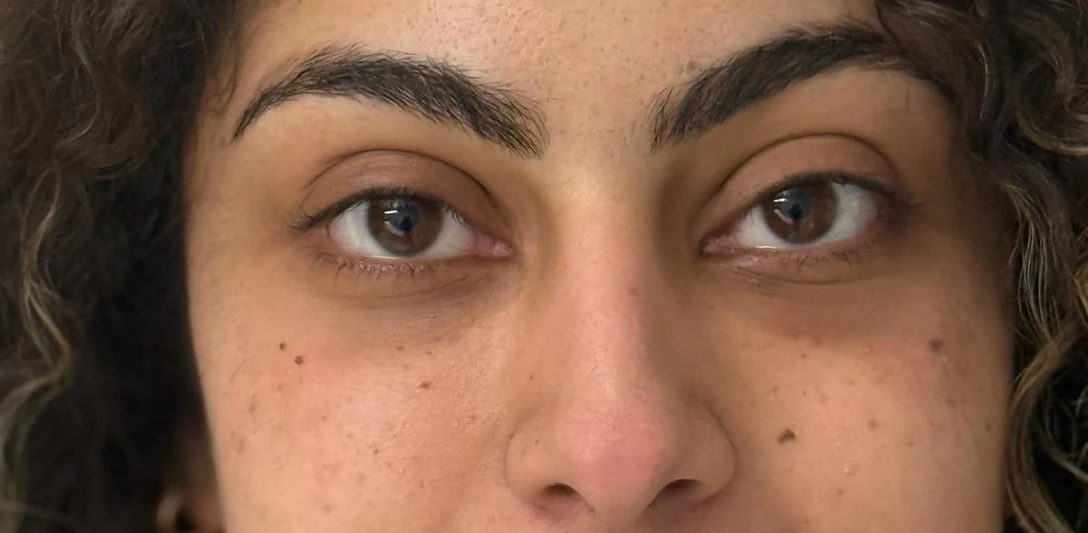
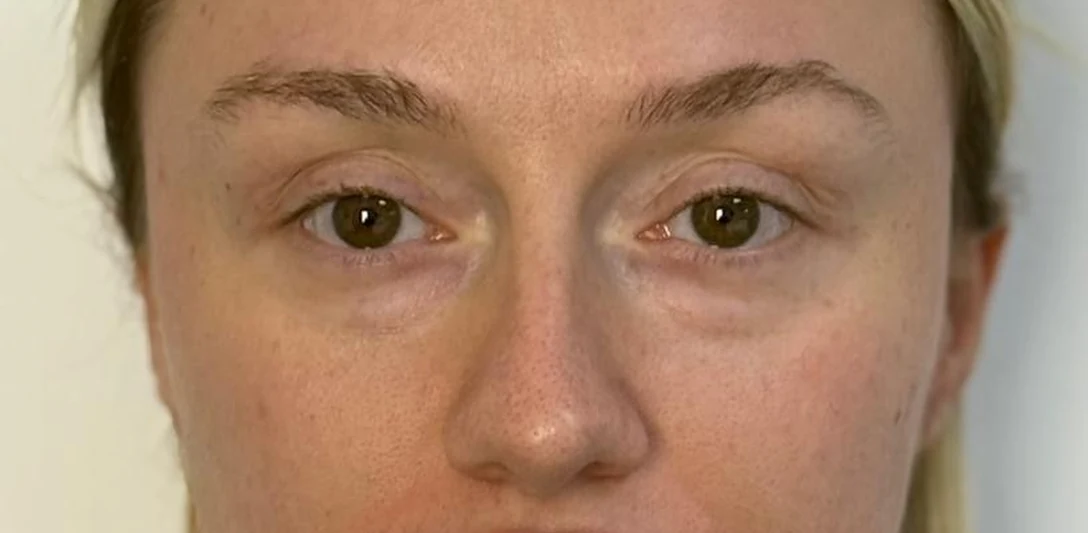
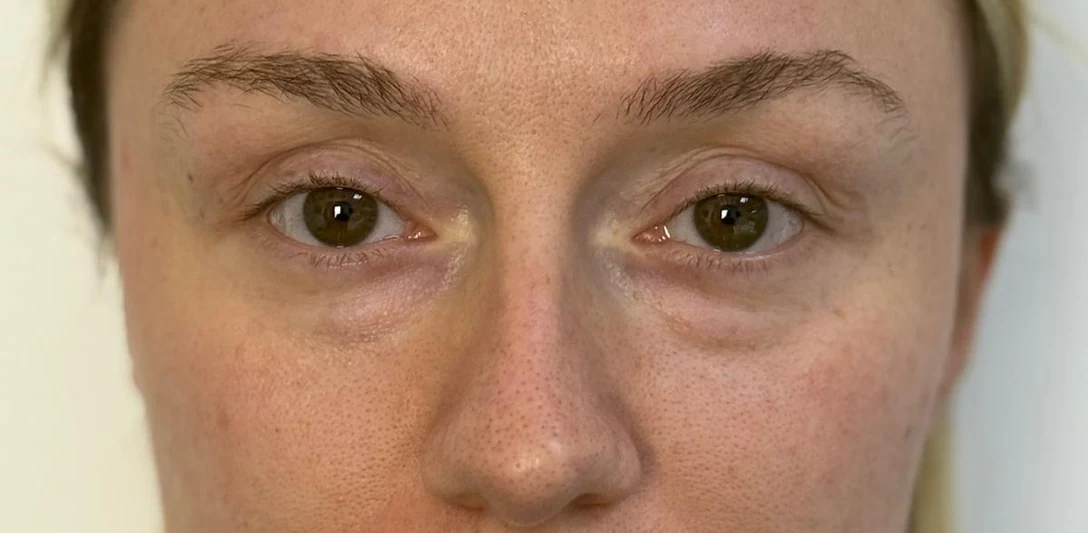
Photographs published with the patients’ written consent.
Written and reviewed by Dr Bernard Hayot, ophthalmologist, RPPS 10003926226.
The different types of dark circles in patients
Dark circles are far from being all the same. There are several types, and they are not treated in the same way.
Hollow dark circles
These dark circles appear as hollows under the eyes and a valley running from the root of the nose to the cheekbone. They generally result from a loss of subcutaneous fat brought on by age. The skin of the lower eyelid is very thin, allowing the bony contours of the eye socket to show through.
Dark circles
Dark circles are different from hollow circles. The skin is dark (brown, bluish, purplish) or even reddish, shades that in every case accentuate the patient’s tired appearance. This transparency is due to the thinness of the eyelid skin, which makes the underlying blood vessels visible.
Dark circles and under-eye bags
Dark circles are often associated with under-eye bags, which age the eyes further. Bags may appear early for congenital or hereditary reasons, but they are generally part of natural ageing. Over time, the fatty cushion that protects the eye from the bony walls is held less and less firmly by the septum and slides downwards.
The importance of consulting a specialist aesthetic doctor
The eye area requires specific expertise. Not all surgeons and aesthetic physicians are specialists in it. Some will offer hyaluronic acid injections to fill hollow dark circles, a technique I strongly advise my patients against. Although natural, hyaluronic acid is a substance that resorbs very poorly in dark circles. Injected into this area, it can swell, absorbing water like a sponge and forming an unsightly bag, or give the lower eyelid a bluish colour.
I encounter this problem daily. Patients come to me with under-eye bags that are in fact the result of old hyaluronic acid injections. The best technique for filling hollow circles is lipofilling (micro-lipofilling), or nano-lipofilling for coloured circles. I explain these procedures in detail during a preliminary consultation. In the meantime, here are a few details.
Treating dark circles: several options to consider
The recommended treatment depends on your dark circles, which is why I analyse your eyes carefully beforehand to guide you towards the most suitable option.
Fat injection into the dark circles
Fat injection into the dark circles, also known as micro-lipostructure, micro-lipofilling or lipofilling, is indicated to fill hollow circles. I restore the volumes that have melted away by transferring fat from your abdomen or knees. The fat is processed (rinsed, cleaned and defibrosed), then reinjected into the hollow circles with a microcannula.
This procedure takes place in the operating theatre, with the patient under general anaesthetic or neuroleptanalgesia, according to their wishes. It lasts between 1 and 2 hours, depending on the procedures involved.
Micro-lipofilling is highly effective against hollow dark circles. The procedure involves swelling for 8 to 10 days, and around 3 weeks are needed to see the final effect.
Nano-lipostructure
Nano-lipostructure involves injecting stem cells and growth factors derived from the patient’s own fat. It can be used to mask dark circles of any kind.
After a local or general anaesthetic, I harvest a small quantity of fat cells from your knee, abdomen or thigh. As with micro-lipostructure, I clean the fat cells to retain only an emulsion rich in stem cells and growth factors.
I then inject the resulting compound into the area to be treated using microcannulas. The cells diffuse and mix naturally with those already present. They gradually regenerate the skin, slightly thickening the dermis and eliminating transparency. I can also offer micro-lipofilling if the dark circles are hollow as well.
The procedure lasts around 1 hour and involves swelling for 5 to 7 days, as well as bruising at the injection sites. The final results appear after a few months.
Laser removal of under-eye bags
Lastly, when under-eye bags are associated with dark circles, I treat both at the same time and propose removal using a CO2 laser via the transconjunctival route, that is, through the red part of the eyelid. Expertise is essential during this procedure to ensure precisely measured movements, without hollowing the eyelid or altering the look of the eyes.
The procedure lasts less than an hour and requires local or general anaesthesia. The result is immediately visible. The bags disappear for good, with no visible scars or marks.
This page is for information. It does not replace a consultation: every situation is judged on examination.