
How do you get rid of under-eye bags for good?
Before / after
Real cases from the practice, unretouched, framed on the treated area only. Each result is individual and does not predict yours.
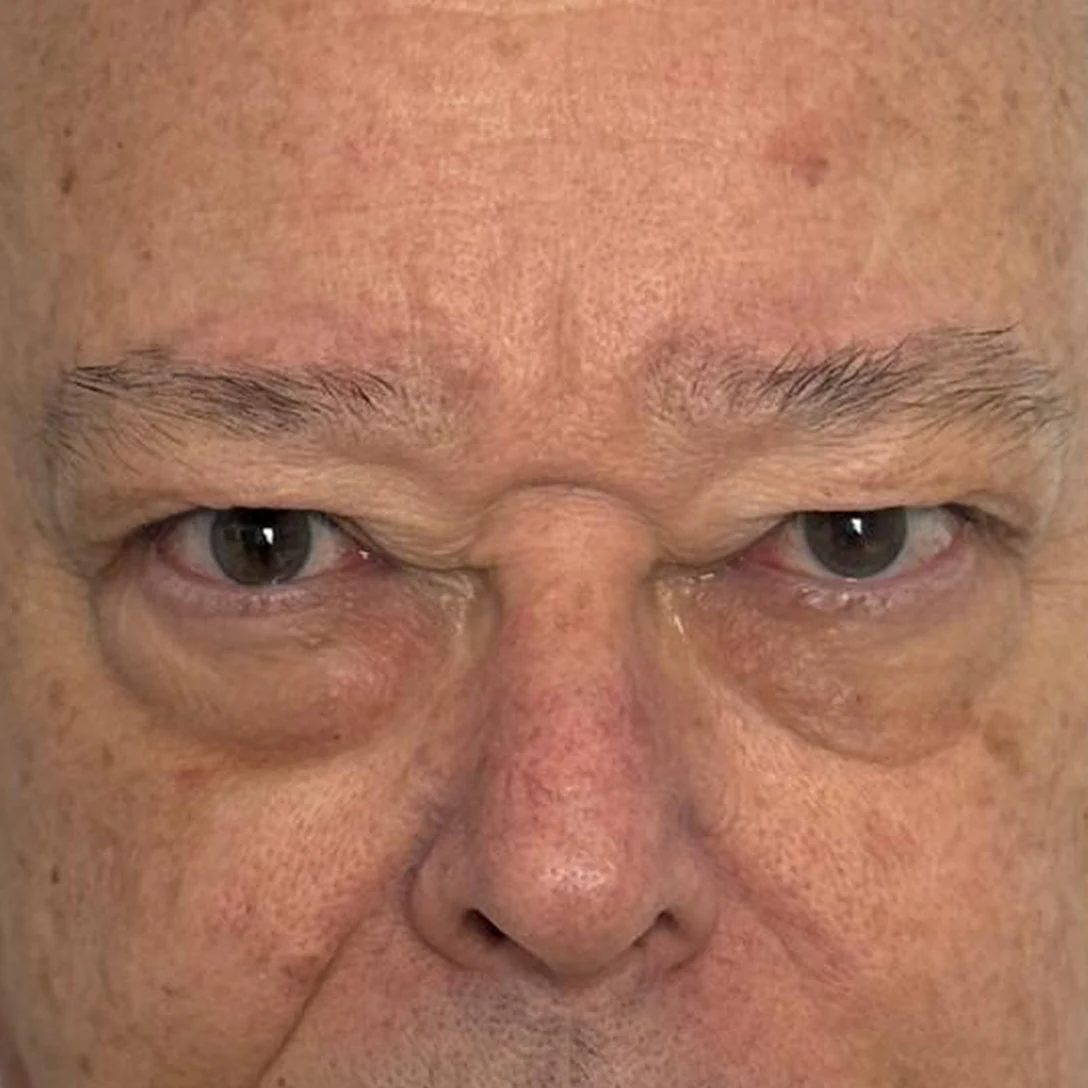
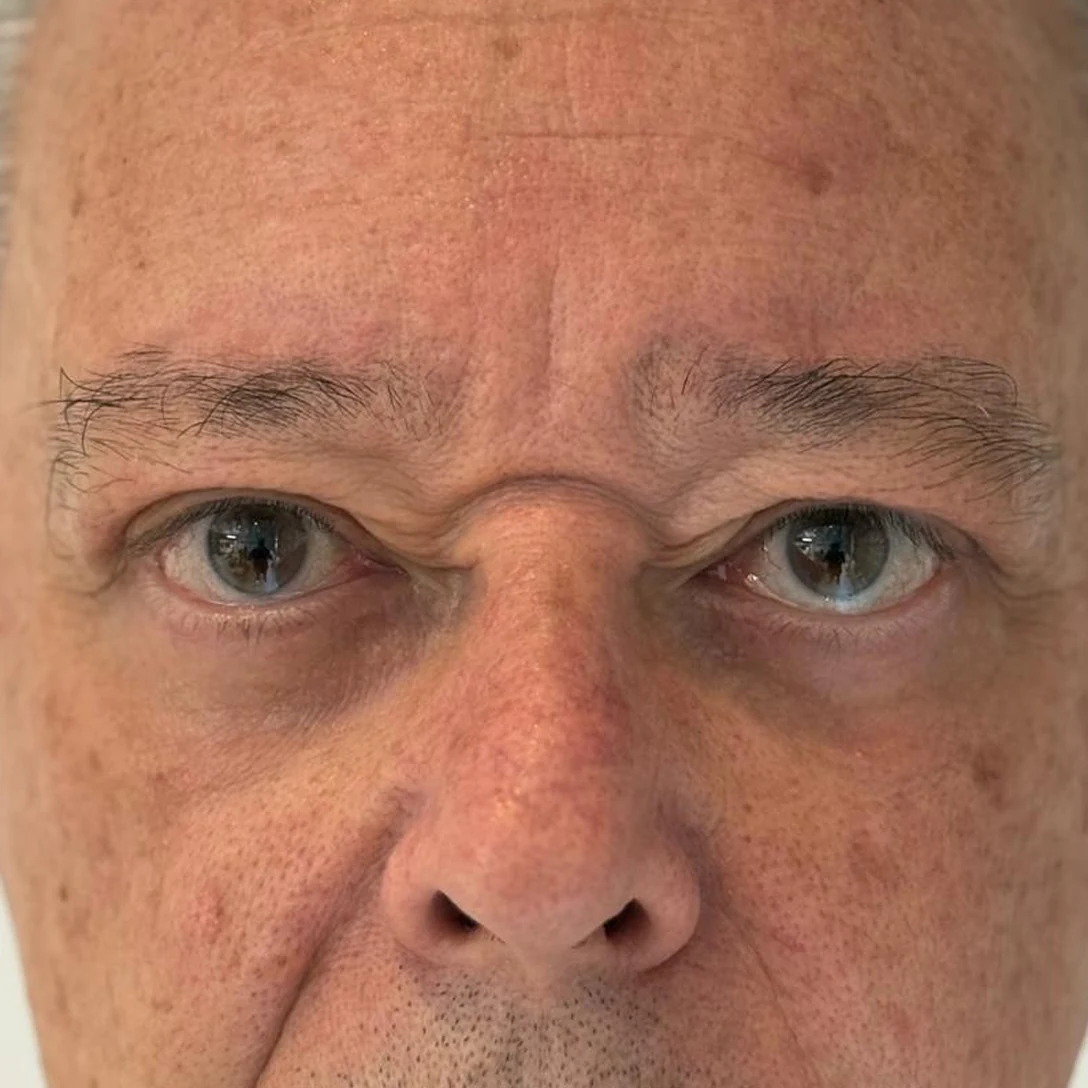
Photographs published with the patients’ written consent.
Written and reviewed by Dr Bernard Hayot, ophthalmologist, RPPS 10003926226.
What characterizes an under-eye bag?
Under-eye bags are characterised by swelling of the lower eyelid. There are two types: bags caused by swelling due to lymphatic oedema (malar bags) and bags caused by an accumulation of fat. Surgical treatment is the only effective and lasting way to get rid of them.
What causes under-eye bags?
Puffiness can be short-lived, appearing on waking because lymph has accumulated in the lower eyelid. This causes swelling, which generally subsides during the first few hours of the day. It can sometimes last longer when there are circulation problems.
It can also become long-lasting as a result of skin ageing. Intra-orbital fat protects the eye from the bony contour. With age and the loss of tissue elasticity, this fat can move outwards and slip under the muscle of the lower eyelid. The eyes then appear less defined, the skin sags and loses its firmness, forming bags under the eyes.
Puffiness can also be caused by external factors, such as allergies, stings or wounds, in which case it is temporary.
Bags are not dark circles. Dark circles are caused by a problem with blood circulation or by thinning of the skin, which changes the colour of the skin under the eyes.
Poor lifestyle habits, such as alcohol, smoking and lack of sleep, can encourage bags to develop and to become established over the long term. They tend to become progressively more pronounced with age.
Surgical treatment of under-eye bags
There are several treatments for under-eye bags. Surgery is a particularly effective option, and the surgical treatment varies according to the type of bag.
For fat bags, transconjunctival surgery is recommended. It allows the fat bags to be removed entirely through the conjunctiva, without removing any skin, so that the look of the eyes is not altered. Healing produces a much firmer septum and scar membrane, which completely prevents recurrence and the emergence of new bags of fat.
Malar bags are more difficult to treat, as they are not bags of fat but lymphatic oedema. They can be reduced, but not completely removed. The recommended method is the sub-palpebral lift, which tightens the orbicularis muscle of the lower eyelid, combined with a micro-lipostructure of the dark circles.
Other surgical and medical procedures to harmonize the eyes
Other surgical techniques and aesthetic medicine are also available to rejuvenate the eyes in a harmonious way:
- Botox injections: to smooth wrinkles on the forehead and around the eyes;
- Hyaluronic acid injections: to restore volume to the upper third of the face;
- : for its tightening effect on fine lines and wrinkles;: for its tensing effect on fine lines and wrinkles;
- tensor threads: to redefine the oval of the face and lift sagging eyebrows.
This page is for information. It does not replace a consultation: every situation is judged on examination.