
What are the advantages and limitations of lipofilling?
Before / after
Real cases from the practice, unretouched, framed on the treated area only. Each result is individual and does not predict yours.
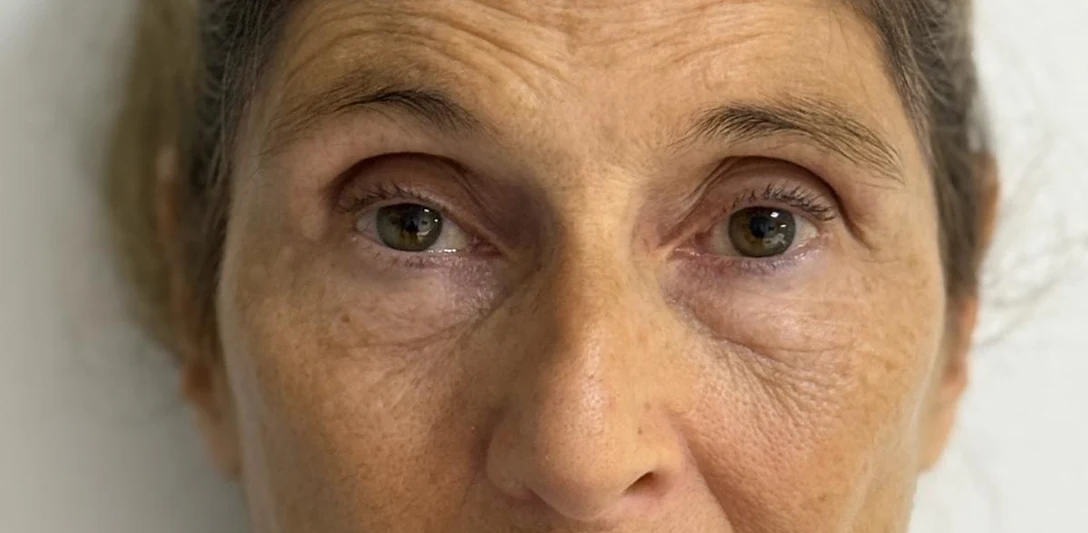
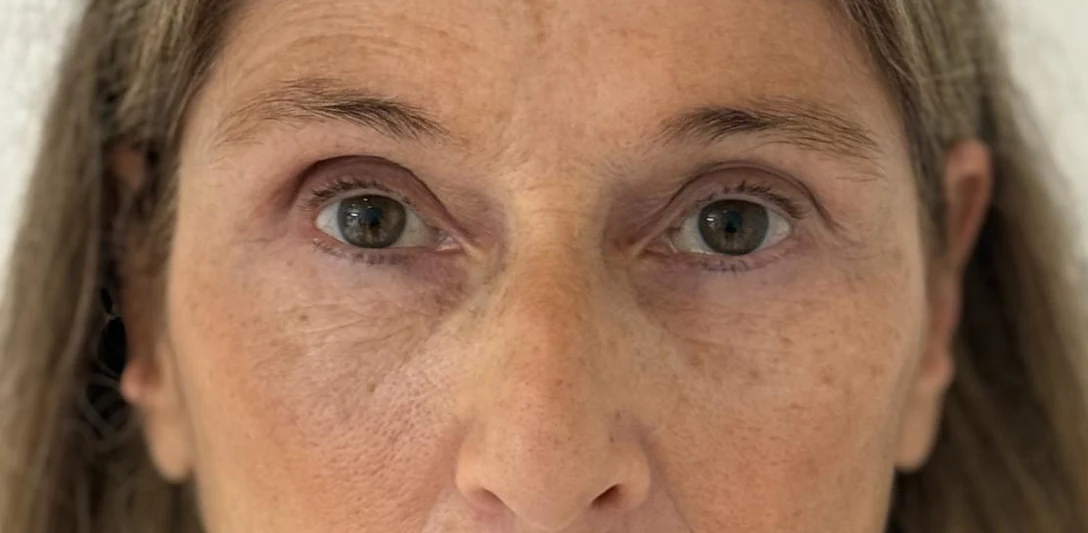
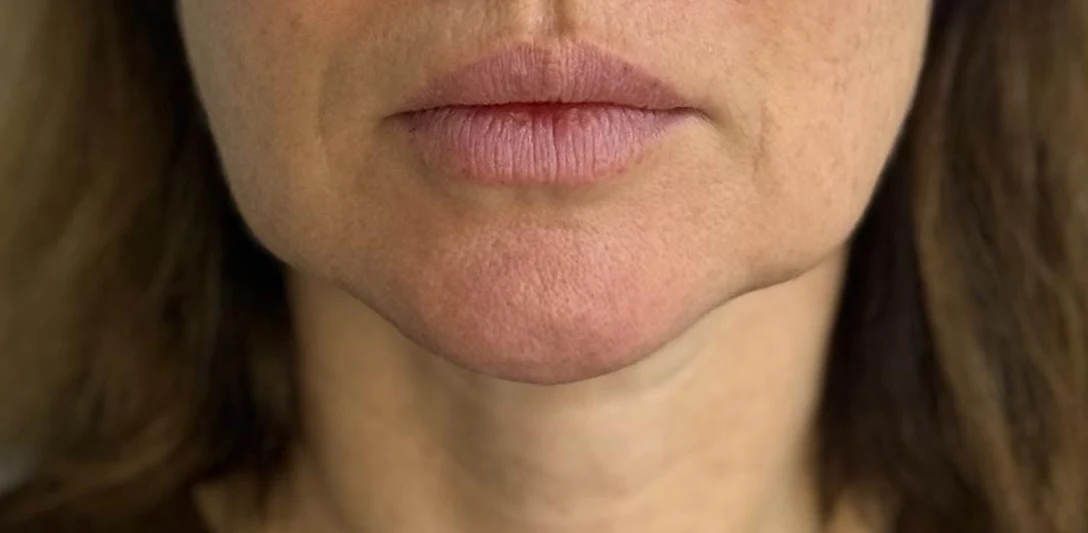
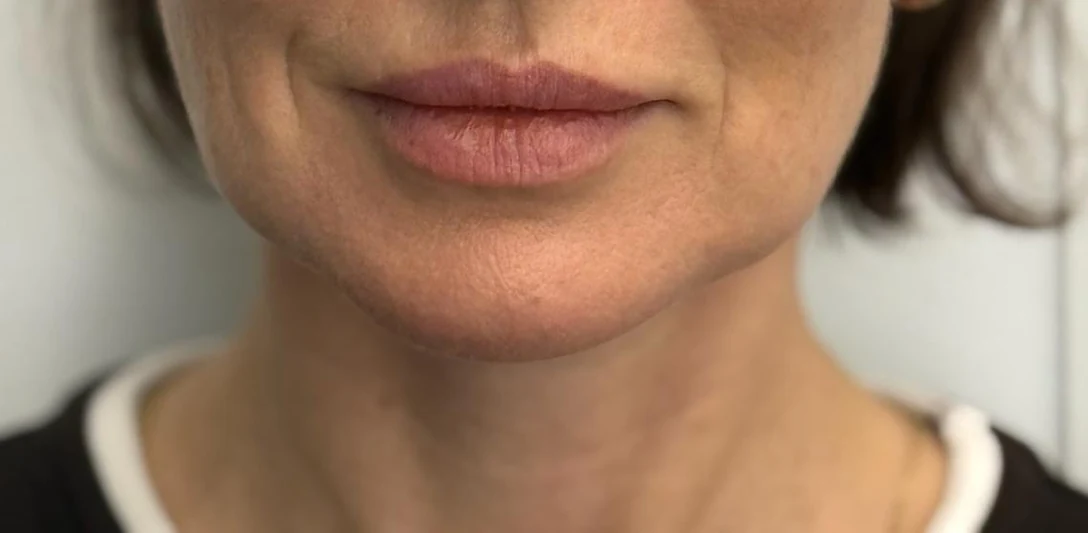
Photographs published with the patients’ written consent.
Written and reviewed by Dr Bernard Hayot, ophthalmologist, RPPS 10003926226.
What is lipofilling?
Lipofilling, or lipostructure, is a method of filling hollows and restoring volume using the patient’s own fat, taken from another site, most often the knee or the abdomen.
By using fat as a filler, the surgeon can restore volumes lost through ageing, for example, or create structures that give new shapes or curves.
Developed in the United States in 1980, this method can be applied to any anatomical region: the buttocks, the breasts (in cosmetic or reconstructive surgery), the hands or the face.
Facial lipofilling can restore a youthful look to a face or to the eyes, because it works in two ways:
- It creates volume as a filler, without a volumising effect;
- It has a trophic action on the skin, as fat is rich in stem cells (stromal vascular fraction). This is also the principle behind nano-lipofilling, which relies on the regenerative and remodelling properties of the dermis, allowing wrinkles to be smoothed out very naturally.
Dr Hayot’s aim in every facial lipofilling procedure is a natural rejuvenating effect that is both clean and discreet, in the sense that his technique should never be guessed at. When injecting fat, the practitioner’s art lies not in creating new volumes, but in restoring old volumes that have melted away. That is what is intended to ensure a natural look.
Lipostructure is therefore ideal for rapidly rejuvenating the face and restoring a rested appearance and a toned, radiant look.
The benefits of facial lipofilling
This minimally invasive method has two major advantages.
Facial lipofilling, a natural, no-rejection method
- Facial lipostructure is an injection of a natural autologous product, meaning that donor and recipient are the same person. There is therefore a very limited risk of rejection, and tolerance is optimal.
- The fat removed undergoes no chemical treatment: it is simply rinsed and filtered, to make it more fluid and to allow perfect remodelling of the tissues.
- This fat injection also brings back stem cells from your own body. Once stimulated, they activate your natural rejuvenation and dermal tissue remodelling capacities.
Lipostructure of the face, a permanent and lasting remodelling
Unlike hyaluronic acid injections, where the product is resorbable, usually within a year, lipostructure is definitive once the graft has taken. The result is more natural, as the fat is incorporated into the tissues and fills them, whereas injected hyaluronic acid takes up water and swells to a greater or lesser extent, while remaining where it was injected without integrating into the tissues.
Once the fat has taken, it is durably fixed: the volumes will vary in the same way as other facial fatty tissue, particularly in the event of weight gain or weight loss. You therefore need to pay close attention to your lifestyle.
Complementary procedures to lipofilling
Lipostructure of the face makes it possible to recreate volumes, whether constitutionally absent or lost (trauma, ageing), to treat all wrinkles and to regenerate skin quality.
Medical Profiloplasty
Lipofilling can be used to create new volumes, for the chin (a chin that is too short or receding) or the mandibular angle (jawline contouring). It is a way of masculinising the lower part of a man’s face, or of strengthening contours that lack definition, giving a more assertive appearance.
Each time, Dr Hayot checks that the defects to be corrected are compatible with lipofilling, to ensure a natural, harmonious result.
Filling of static facial wrinkles
Lipofilling can be used to treat most facial wrinkles.
Lipofilling of the nasolabial folds, the contours of the mouth, the crow’s feet or the glabellar lines gives a natural, lasting and often spectacular result.
Using very fine cannulas, micro-lipofilling fills these wrinkles perfectly, in areas where the skin is very thin and hyaluronic acid injection is delicate. It is also the treatment of choice for the neck, the décolleté and the hands.
Facial rejuvenation is sought, with harmonious, natural results.
Addition blepharoplasty or facelift
Lipofilling is the technique of choice for restoring fatty volumes that have melted with age, for example to fill the temples, the cheeks or the cheekbones. It treats the contours of the face, with a clear rejuvenating effect, while respecting natural shapes.
A specialist in eye rejuvenation, Dr Hayot also recommends this additional blepharoplasty to treat hollow circles: in this very thin-skinned area, the hyaluronic acid injection risks being visible, with granulomas or a Tyndall effect.
A precise technique is required, however, and the fat must be prepared by filtration, in order to obtain a natural result with genuinely rejuvenated eyes.
Lipostructure is in fact so effective that the whole area sometimes has to be treated at the same time, so as not to overlook the ageing of the surrounding tissues. Dr Hayot will then tell you whether or not you need a facelift or an associated blepharoplasty to rejuvenate your eyelids.
The limits of facial lipofilling
It’s important to understand that this fatty tissue will then live on like the rest of your body fat, as adipocytes can be loaded with fat up to 50 times their initial volume. A fat injection is a lasting implant, but it does not stop ageing or weight gain. Some of this fat may melt away naturally over the years. Conversely, significant weight gain after lipofilling could alter the aesthetic result, which is why a healthy lifestyle is essential.
This page is for information. It does not replace a consultation: every situation is judged on examination.